
Office Address
123/A, Miranda City Likaoli Prikano, Dope
Phone Number
+0989 7876 9865 9
+(090) 8765 86543 85
Email Address
info@example.com
example.mail@hum.com


123/A, Miranda City Likaoli Prikano, Dope
+0989 7876 9865 9
+(090) 8765 86543 85
info@example.com
example.mail@hum.com
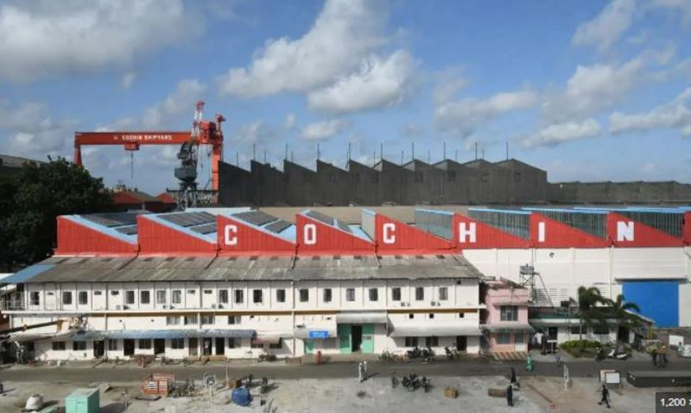
In his first media
interaction after taking additional charge as Chairman and Managing Director on
February 1, Jose V J described the order for six LNG-powered feeder container
ships as a “game changer” for the Mumbai-listed state-run shipbuilder.
“Delivering the
ships on time and as per quality are very important things. We have no other
option but to deliver on time when we are dealing with such giant clients;
their monitoring and supervision will be like that,” Jose said in an interview
to ET Infra from South Korea, where he is on an official visit.
Under the contract signed in New Delhi on February 18,
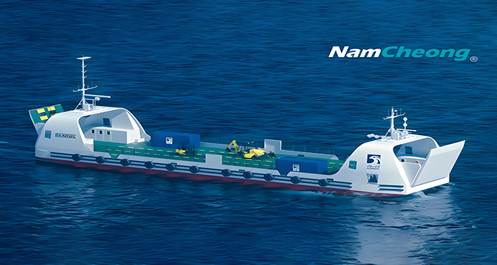
the first of the six vessels—each with a capacity of about 1,700 twenty-foot
equivalent units (TEUs)—is scheduled for delivery within 36 months of signing.
The remaining ships will be delivered at the rate of two per year thereafter.
The LNG-powered
feeder vessels are expected to strengthen India’s credentials in building
environmentally advanced cargo ships for global liners.
Jose noted that CMA CGM S A, ranked among the world’s
top three container carriers, has indicated interest in placing orders for
larger vessels at Cochin Shipyard, subject to successful execution of the
current contract.
“After we gain confidence in building these six feeder
container ships, they have expressed willingness to place orders for big ships
at Cochin Shipyard, provided we deliver these six ships on time and quality,”
he said.
The French carrier had sought the association of a
South Korean shipbuilder for the project. Cochin Shipyard already has a
technical tie-up with HD Korea Shipbuilding & Offshore Engineering Co Ltd
(HDKSOE), one of the world’s leading shipbuilding groups.
Under the
arrangement, the ships will be constructed in India with South Korean design
and technical support. Major equipment will be sourced from South Korea,
including systems supplied by Hyundai, while the vessels will be designed by
KOMAC. The engines will be supplied by Everllence (formerly MAN Energy
Solutions), manufactured in South Korea by Hyundai under licence.
Jose said even South Korean shipbuilding executives
were struck by the significance of the contract signing. While CMA CGM S A is
currently building multiple 24,000 TEU vessels at South Korean yards, including
Hyundai, such contracts are typically signed by senior executives. For the
Cochin Shipyard deal, however, CMA CGM Group Chairman Rodolphe Saade personally
travelled to India to sign the agreement.
“That sent a strong signal to the global shipping
industry about India’s emergence as a potential alternative shipbuilding
destination,” Jose said.
Originally, CMA CGM
had planned to place a firm order for four ships with options for two more.
Cochin Shipyard persuaded the carrier to convert the entire package into a firm
six-vessel order by offering more competitive pricing. Each ship is valued at
approximately $60 million.
The yard will also benefit from financial support
under the government’s Shipbuilding Financial Assistance Scheme. As LNG-powered
container ships qualify as specialised vessels, Cochin Shipyard will receive
state aid of 15 per cent on the first ₹100 crore and 25 per cent on the
remaining value of each ship, translating into an average subsidy of about 23.1
per cent per vessel. Steel cutting,
marking the start of construction, is planned for next year due to long lead
times for critical components such as engines.
Jose credited Prime Minister
Narendra Modi for playing a key role in securing the landmark order and
emphasised that Indian shipyards must now capitalise on the ₹69,725 crore
maritime revival package approved by the Union Cabinet last year.
“We can’t expect
anything more from the government. Whatever was in our wish list, they have
given us everything. Now, it’s up to the shipyards to take it and grow on the
global stage,” he said. The CMA CGM
contract is being viewed as a critical test case for India’s ability to deliver
complex, mainline commercial vessels on schedule—an area where global fleet
owners have traditionally expressed caution. Successful execution, industry
observers say, could open the door for Indian yards to secure larger and more
technologically advanced shipbuilding orders in the years ahead.