
Office Address
123/A, Miranda City Likaoli Prikano, Dope
Phone Number
+0989 7876 9865 9
+(090) 8765 86543 85
Email Address
info@example.com
example.mail@hum.com


123/A, Miranda City Likaoli Prikano, Dope
+0989 7876 9865 9
+(090) 8765 86543 85
info@example.com
example.mail@hum.com
The authorization,
issued Thursday by the U.S. Treasury’s Office of Foreign Assets Control (OFAC)
as Russia-related General License 133, permits transactions necessary for
the sale, delivery, or offloading of Russian-origin crude oil and
petroleum products loaded on vessels on or before 12:01 a.m. EST on March 5,
2026. The waiver expires at 12:01 a.m. EDT on April 4, 2026.
Under the terms of the
license, the cargoes must be delivered to ports in India, and the
purchaser must be an entity organized under Indian law. The
authorization also covers operational services typically required to complete a
voyage, including bunkering, crewing, vessel management, piloting,
insurance, classification, salvage, and port services, as well as actions
needed to ensure vessel safety, crew welfare, and environmental
protection. U.S. Treasury
Secretary Scott Bessent said the measure is designed as a limited
stop-gap to allow oil already in transit to reach market while preventing
additional revenue flows to Russia.
“President Trump’s
energy agenda has resulted in oil and gas production reaching the highest
levels ever recorded,” Bessent said in a statement posted on social media. “To
enable oil to keep flowing into the global market, the Treasury Department is
issuing a temporary 30-day waiver to allow Indian refiners to purchase Russian
oil.”
Bessent emphasized that the authorization applies
only to cargoes that had already been loaded before the cutoff date.
“This deliberately short-term measure will not
provide significant financial benefit to the Russian government as it only
authorizes transactions involving oil already stranded at sea,” he said.
The Treasury chief added that Washington expects
India to increase purchases of American energy in the coming years.
“India is an essential
partner of the United States, and we fully anticipate that New Delhi will ramp
up purchases of U.S. oil,” Bessent said. “This stop-gap measure will alleviate
pressure caused by Iran’s attempt to take global energy hostage.”
According to shipping
association BIMCO, India accounted for roughly one-third of its
seaborne oil imports from Russia in 2025, representing about 25 percent of
Russia’s total seaborne crude exports.
India had already begun scaling back purchases of Russian crude earlier
this year. BIMCO data shows imports from Russia fell 34 percent
year-on-year during the first five weeks of 2026, as new sanctions restrictions
and shifting trade dynamics began to reshape global energy flows.
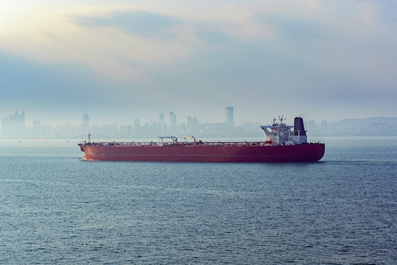
For tanker markets, the temporary waiver could
allow a limited number of vessels carrying Russian cargoes—potentially
including ships from the parallel or “shadow” fleet used to move
sanctioned oil—to complete voyages already underway without violating U.S.
sanctions rules.
However, the license
explicitly states that it does not authorize transactions involving Iran
or Iranian-origin goods or services beyond those strictly necessary to
complete the permitted deliveries.