

Office Address
123/A, Miranda City Likaoli Prikano, Dope
Phone Number
+0989 7876 9865 9
+(090) 8765 86543 85
Email Address
info@example.com
example.mail@hum.com


123/A, Miranda City Likaoli Prikano, Dope
+0989 7876 9865 9
+(090) 8765 86543 85
info@example.com
example.mail@hum.com
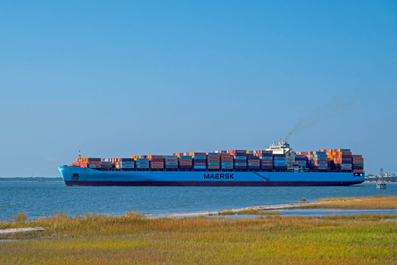
The deal gives Maersk early access to a low-carbon fuel that can sharply cut
lifecycle greenhouse gas emissions, addressing one of the sector’s key hurdles:
reliable alternative fuel supply.
Alongside bio‑LNG, Maersk has trialled multiple e‑methanol blends to assess operational
performance and cost sensitivity.
These tests go beyond experimentation, reflecting
the practical challenge of integrating alternative fuels across a global fleet
while maintaining commercial viability.
Different operators
have varying cost thresholds for decarbonisation. Testing multiple blends
allows Maersk to build operational flexibility into its
service offerings, balancing fuel availability, costs, and customer
requirements.
The strategy shows a broader approach to scaling
low-carbon fuels. Securing bio‑LNG mitigates supply risk, while e‑methanol
trials provide insight into how vessels can operate under variable fuel
scenarios.
Together, these steps create a roadmap for
deploying low-carbon fuels at scale, demonstrating that the next phase of
shipping decarbonisation will depend as much on fuel strategy and supply
certainty as on vessel technology.