

Office Address
123/A, Miranda City Likaoli Prikano, Dope
Phone Number
+0989 7876 9865 9
+(090) 8765 86543 85
Email Address
info@example.com
example.mail@hum.com


123/A, Miranda City Likaoli Prikano, Dope
+0989 7876 9865 9
+(090) 8765 86543 85
info@example.com
example.mail@hum.com
Reports broke in the Indian media late on Friday, March 6, that the
country has quietly been harboring an Iranian vessel this week after it made an
urgent request to enter an Indian port. Off-the-record comments from a government spokesperson assert that the
request was made just before the U.S. and Israeli attacks began, but the ship
quietly entered port the same day the IRIS Dena was sunk.
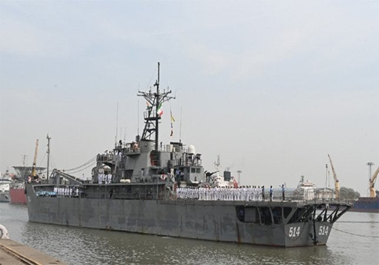
The vessel is the IRIS Lavan, an
old-age Landing Craft, that was sent to India as part of the Iranian fleet for
the naval review in mid-February. The vessel was one of four built in the 1970s
by the UK’s Yarrow Shipbuilder, with Lavan delivered after the Iranian
revolution. Two later ships were canceled.
Commissioned in 1985, the ship is 2,500 tons
displacement. It is 305 feet in length (93 meters) and has remained active with
the three earlier ships, which were all commissioned in the 1970s. The ship had
made previous goodwill visits to India, including in 2025, and reportedly
traveled to India last month to participate in the review.
The media reports said Iran and the vessel had made
a request to India on February 28 for the vessel to dock in Kochi. They were
reporting the ship was experiencing mechanical troubles.
India granted
permission, it says on March 1, for the ship to dock in Kochi, and the reports
indicate it slipped into the port on March 4. It had a crew of 183 aboard, and
they are reportedly now being housed at a naval facility.
News of this vessel having arrived in India came
out the same day as Sri Lanka took control of another Iranian supply ship,
IRIS Bushehr, which coincidentally was also reporting mechanical
troubles. The Sri Lankan government debated whether it should permit the ship
to enter its territorial waters or permit it to dock. They agreed to take
control of the ship and put it in a remote port in the north while the sailors
were removed from the ship and transferred to a naval base outside Colombo.
Media reports
highlight that the war has created political pressures, especially in India,
which is trying to remain neutral based on its relations with both Iran and the
United States. After the IRIS Dena was sunk, political pressure grew in India,
and the government joined the search and rescue mission, saying it was
supporting Sri Lanka. The government also issued a strong denial that it was
permitting U.S. forces to use its ports.
Late on Thursday,(5
MAR ) it was announced that the Trump administration had given India a special
30-day permit so that it could purchase Russian oil. India has been attempting
to curtail its purchases of Russian energy products to win favor with the U.S.
and stop Trump’s sanctions. For its part, the Trump administration said it
would only be a small amount of oil, and the short duration of the permit meant
it would be oil already shipped and in transit but would also help to relieve
some pressure on global oil markets, as the price has skyrocketed after the
start of the campaign against Iran.