

Office Address
123/A, Miranda City Likaoli Prikano, Dope
Phone Number
+0989 7876 9865 9
+(090) 8765 86543 85
Email Address
info@example.com
example.mail@hum.com


123/A, Miranda City Likaoli Prikano, Dope
+0989 7876 9865 9
+(090) 8765 86543 85
info@example.com
example.mail@hum.com
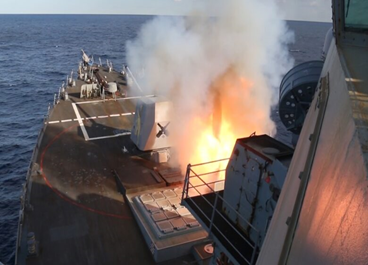
The Combined Maritime Forces’ Joint Maritime Information Center (JMIC)
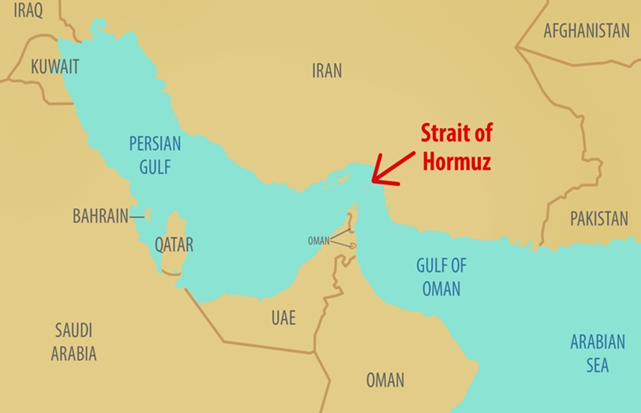
advisory underscores that risk is now reaching vessels well beyond the Strait
of Hormuz itself.
The security alert comes as navigational integrity deteriorates.
“Significant GNSS interference continues across the Strait of Hormuz
approaches, Gulf of Oman, and the Arabian Gulf,” JMIC warned, noting positional
offsets, AIS anomalies and intermittent signal degradation that have surged
following the US and Israel’s attacks on Iran since February 28. The centre
added that congestion and degraded positional data “act as a risk amplifier,
increasing probability of navigational incident or miscalculation.” Commercial traffic has effectively frozen. Where the strait historically recorded roughly
138 vessel transits per 24‑hour period, a recent AIS review showed daily
transits plunged to single digits – only two commercial crossings were
confirmed in the past 24 hours, and neither were tankers. The JJMIC said this
reflected a near‑total pause driven by security warnings, insurance withdrawals
and operational caution rather than a formal legal closure.
The tanker market has reacted with instantaneous
shock‑pricing. Tankers International data shows extreme, sometimes theoretical,
VLCC fixes and subs being quoted: Dynacom’s 300,000 dwt Adamantios (2022) was
fixed to Reliance for a world record $537,913 a day for a voyage to India while
the Kalamos VLCC (2010) is on subjects to Bharat Petroleum with a notional
$758,000 a day on subs. Earlier in the week Minerva’s Pantanassa reportedly
failed at $420,000 a day amid competing bids and market paralysis.
Brokers caution many of these are paper or subject rates rather than
completed fixtures, as owners and charterers pause to assess risk.