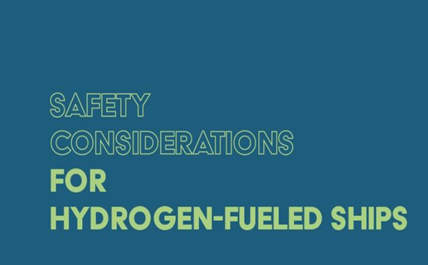
KR Publishes Research Report on Safety Considerations for Hydrogen-Fueled Ships
The publication comes amid
growing international efforts to establish regulatory frameworks for hydrogen
as a marine fuel. At the 11th session of the International Maritime Organization’s
Sub-Committee on Carriage of Cargoes and Containers (IMO CCC), draft interim
guidelines for the safety of ships using hydrogen as fuel were developed. The
guidelines are expected to receive final approval at the 111th session of the Maritime
Safety Committee (MSC), scheduled for May 2026.
Hydrogen, which emits no
carbon during combustion, is gaining attention as a promising alternative fuel
for maritime decarbonization. It can also serve as a feedstock for producing
other alternative fuels such as methanol, suggesting that hydrogen-based fuel
supply chains are likely to expand in the future. As international trade and
transportation of hydrogen increase, demand for hydrogen carriers and hydrogen-fueled
ships is also expected to grow.
However, hydrogen presents several safety challenges due to its unique
physical and chemical properties. These include high flammability and explosion
risks, hydrogen embrittlement, and the need for extreme storage conditions
compared with conventional marine fuels.
For safe onboard storage and use, hydrogen must be handled either as
compressed hydrogen or liquefied hydrogen. This requires storage under
extremely high pressures—hundreds of times atmospheric pressure—or at cryogenic
temperatures of approximately −253°C. As a result, ensuring the safety and
reliability of hydrogen fuel containment systems, fuel supply systems, and
related onboard infrastructure has become a key technical priority.
To support the commercialization
of hydrogen as a marine fuel and enhance industry understanding of its safety
implications, KR developed the report as a technical reference for the maritime
sector. The publication provides an overview of maritime hydrogen systems, analyzes
hydrogen-related accident cases, identifies key hazards and mitigation
strategies, and reviews relevant international regulations.
KIM Daeheon, Executive Vice President of KR, stated, “We hope this research will serve as a useful
reference for industry, academia, and research institutions involved in the
development of hydrogen-fueled ships. We will continue to support our customers
and the maritime industry by advancing technology development and sharing the
latest technical knowledge to help address evolving environmental
regulations.” The
report is available to the public on the KR website (www.krs.co.kr).
Related News