


Office Address
123/A, Miranda City Likaoli Prikano, Dope
Phone Number
+0989 7876 9865 9
+(090) 8765 86543 85
Email Address
info@example.com
example.mail@hum.com


123/A, Miranda City Likaoli Prikano, Dope
+0989 7876 9865 9
+(090) 8765 86543 85
info@example.com
example.mail@hum.com
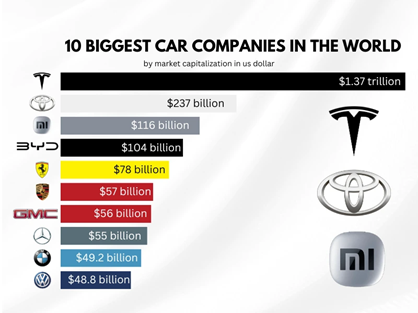
Major US, European,
and Japanese automakers are undergoing a process of strategic repositioning in
the face of the accelerated rise of Chinese manufacturers, which have
consolidated their leadership in electric vehicles, batteries, industrial
design, and software development, according to an investigation published this
week by the BBC on the occasion of Auto China 2026, the world's largest motor
show. The transformation is reflected in the public acknowledgment from
executives themselves: the president of Honda, Toshihiro Mibe, said after
visiting a highly automated plant in Shanghai that his company has “no chance
against this,” while Ford CEO Jim Farley warned that Western carmakers are “in
a fight for our lives.”
Foreign brands' market share in China fell
from 64% in 2020 to 32% this year, according to data from the consultancy
Automobility. The International Energy Agency estimates that producing a small
electric SUV in China is at least 30% cheaper than in advanced economies,
thanks to lower battery costs and a dense supply chain. The Chinese company BYD
has developed ultra-fast charging systems capable of adding 400 kilometres of
range in five minutes. At the Xiaomi factory on the outskirts of Beijing, a
vehicle rolls off the production line every 76 seconds. The Huawei Maextro S800
luxury sedan has outsold the Porsche Panamera and BMW 7 Series combined in
China's segment for vehicles above USD 100,000.
The
Chinese consolidation has altered the nature of traditional alliances.
Stellantis, owner of the Peugeot and Jeep brands, recently signed an agreement
worth one billion euros with the Chinese state-owned Dongfeng to produce
vehicles intended for both the domestic market and export, and plans to
introduce the Chinese electric brand Voyah into Europe. Volkswagen, in turn,
paid USD 700 million to access the software architecture and autonomous driving
systems of the Chinese firm XPeng, a technology the German group acknowledged
it could not develop internally within the required timeframes. Toyota,
Hyundai, Ford, and Nissan are also expanding their research operations in China
or evaluating the production of models designed in that country at foreign
plants.
China currently exports around seven
million vehicles a year, close to half of them electric. Its expansion into
Europe faces tariffs of up to 45%, and it is practically excluded from the US
market by levies above 100%. Brands such as BYD, Chery, and SAIC are
nonetheless deepening their penetration into Europe and emerging markets. The
Chery Jaecoo 7 became one of the best-selling models in the United Kingdom just
fourteen months after its launch. The firm XPeng has announced that it is
prioritizing the development of humanoid robots and flying cars alongside
electric vehicles.