




Office Address
123/A, Miranda City Likaoli Prikano, Dope
Phone Number
+0989 7876 9865 9
+(090) 8765 86543 85
Email Address
info@example.com
example.mail@hum.com


123/A, Miranda City Likaoli Prikano, Dope
+0989 7876 9865 9
+(090) 8765 86543 85
info@example.com
example.mail@hum.com
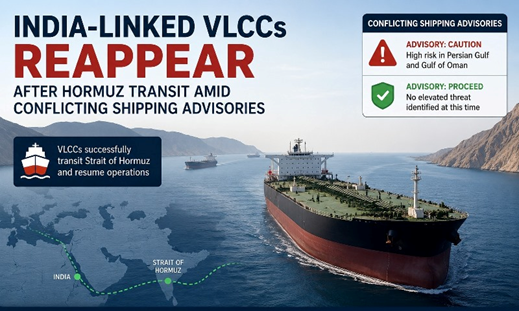
The vessels — Desh Vibhor, Desh Vaibhav, and Sanmar
Herald — were last observed signaling near the Strait late Friday (19 June)
before reappearing on Sunday. Together, the tankers are transporting
approximately 6 million barrels of crude oil destined for India or linked to
Indian ownership. Their movements come amid heightened
uncertainty over navigation through the strategic Strait of Hormuz, following
conflicting statements regarding the waterway’s operational status. While Iran
claimed the strait had been closed, citing regional security concerns, the U.S.
military reported continued vessel movements, stating that dozens of merchant
ships carrying significant volumes of oil had successfully crossed the
chokepoint. Ship-tracking data indicate
sustained two-way tanker traffic through the region. Several laden crude
carriers and LNG vessels were observed entering and exiting the Persian Gulf,
while some vessels temporarily switched off their AIS transponders during
transit, a practice occasionally adopted for security and commercial reasons. The reappearance of the India-linked tankers
is likely to reassure energy markets and Indian refiners, underscoring the
continued flow of crude supplies despite elevated geopolitical tensions in the
Gulf region. Meanwhile, maritime security agencies
have issued varying navigation guidance. The Joint Military Information Center
advised vessels that they may continue using the southern transit route through
Hormuz with AIS systems active, while earlier advisories had recommended
reduced electronic signaling due to security concerns. The guidance follows
reports of a potential maritime mine hazard along parts of the route. The
developments highlight the strategic importance of the Strait of Hormuz,
through which a substantial share of the world’s seaborne crude oil and LNG
exports pass, making uninterrupted navigation critical for global energy
security.