




Office Address
123/A, Miranda City Likaoli Prikano, Dope
Phone Number
+0989 7876 9865 9
+(090) 8765 86543 85
Email Address
info@example.com
example.mail@hum.com


123/A, Miranda City Likaoli Prikano, Dope
+0989 7876 9865 9
+(090) 8765 86543 85
info@example.com
example.mail@hum.com
According to
reports by The Wall Street Journal and Reuters, citing US
officials, the attack was carried out by Iran’s Islamic Revolutionary Guard
Corps (IRGC). The incident occurred just hours after Tehran warned that vessels
using routes not approved by Iran could face enforcement action. The United Kingdom Maritime Trade Operations
(UKMTO) said the vessel reported being hit by a projectile near the coast of Oman.
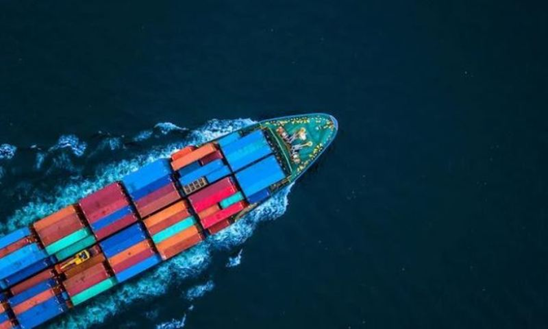
The strike damaged the ship’s bridge but caused no casualties. Four maritime
sources later identified the vessel as the Singapore-flagged Ever Lovely. The attack poses the first significant
challenge to the US-Iran agreement brokered by US President Donald Trump, which
was intended to end months of hostilities and restore confidence in commercial
shipping through one of the world’s busiest maritime trade corridors. The
incident has intensified scrutiny over Washington’s response should Iran be
found to have breached the terms of the accord.
Shortly before the reported attack, Iran’s Islamic
Revolutionary Guard Corps warned that only vessels transiting along routes
designated by Tehran would be guaranteed safe passage through the Strait of
Hormuz. The Persian Gulf Strait Authority (PGSA), established by Iran to
oversee navigation in the waterway, reinforced the warning in a statement
posted on X, saying that “consequences arising from passage through
unauthorised routes shall be the responsibility of the owner, operator, and
vessel commander.”
While Iran has not officially commented on the attack,
the Revolutionary Guards reiterated earlier on Thursday (25 June) that action
would be taken against vessels failing to comply with its designated transit routes. In response to the incident, the
International Maritime Organization (IMO) temporarily suspended its newly
launched voluntary evacuation programme designed to assist ships and seafarers
leaving the Gulf after months of regional conflict. The initiative, introduced earlier this
week, was intended to facilitate the safe departure of hundreds of stranded
vessels and thousands of seafarers who had remained in the region since
fighting erupted in late February. IMO Secretary-General Arsenio Dominguez
said the organisation had decided to pause the programme “to reconfirm that the
necessary safety guarantees continue to be in place for the ships on our
evacuation list and all those in the region.” The IMO clarified that Ever Lovely was not participating in
the evacuation programme. Under the initiative, vessels could voluntarily exit
the Gulf using either an Iranian or Omani transit route under international
coordination.
The latest attack has renewed concerns over the
security of shipping in the Strait of Hormuz, despite recent efforts to
stabilise the region. Earlier on
Thursday, US Secretary of State Marco Rubio warned that any Iranian
interference with commercial shipping would have serious consequences. “If Iran threatens or blocks ships in the
strait, then we’re going to have a problem,” Rubio told reporters while
concluding a tour of Gulf states. Meanwhile, US Energy Secretary Chris Wright
said crude oil flows through the Strait of Hormuz had nearly returned to
pre-conflict levels, with more than 20 million barrels of oil transiting the
waterway over the previous 24 hours.
The attack on Ever Lovely
now raises fresh uncertainty over the durability of the US-Iran agreement and
the safety of global maritime trade through one of the world’s most
strategically important shipping lanes.