


Office Address
123/A, Miranda City Likaoli Prikano, Dope
Phone Number
+0989 7876 9865 9
+(090) 8765 86543 85
Email Address
info@example.com
example.mail@hum.com


123/A, Miranda City Likaoli Prikano, Dope
+0989 7876 9865 9
+(090) 8765 86543 85
info@example.com
example.mail@hum.com
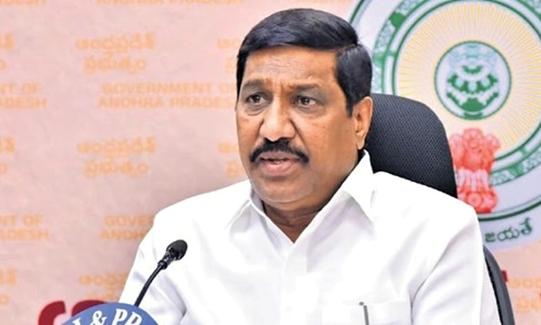
Addressing the media at the
Secretariat on Wednesday, (15 July) the Minister clarified that the PPP model
is a globally accepted framework designed to improve operational efficiency
without transferring ownership of government assets. Reddy noted that the PPP
model has been successfully adopted in India’s port sector for the past 25 to
30 years. Of the 119 non-major ports currently operational or under development
across the country, nearly 108 ports (around 91%) are being developed or
operated under the PPP framework. He further highlighted that states such as
Karnataka, Odisha, and Puducherry manage all their non-major ports through PPP
arrangements, while Gujarat operates around 90% of its non-major ports under
the same model. The Central Government has also extensively adopted PPP for
port development. Explaining the
structure of the model, the Minister said the government is implementing
projects under the Design, Build, Finance, Operate and Transfer (DBFOT)
framework. He stressed that all sovereign rights—including port ownership, land
ownership, coastline rights, maritime security, policy-making, tariff
regulation, and environmental compliance—remain permanently with the State
Government. According to the Minister, the private concessionaire is responsible
only for the operation and maintenance of port facilities under strict
government supervision. The State retains full authority to monitor
performance, impose penalties for contractual violations, and terminate the
30-year concession agreement if necessary. Refuting
allegations surrounding the Ramayapatnam Port project, Reddy accused the
previous YSRCP government of spreading misinformation, dismissing its claim of
having completed 95% of the project as “completely false.”
The Minister reiterated that
the present government remains committed to developing world-class port
infrastructure through transparent PPP mechanisms while ensuring complete
public ownership and regulatory control over strategic maritime assets.