




Office Address
123/A, Miranda City Likaoli Prikano, Dope
Phone Number
+0989 7876 9865 9
+(090) 8765 86543 85
Email Address
info@example.com
example.mail@hum.com


123/A, Miranda City Likaoli Prikano, Dope
+0989 7876 9865 9
+(090) 8765 86543 85
info@example.com
example.mail@hum.com
In a statement
posted on social media on Saturday,(18 July) the Embassy described the attack
as a “war crime” and accused the United States of deliberately targeting
civilian and economic infrastructure in violation of international law. “The
deliberate targeting of civilian and economic infrastructure, including the
Chabahar Port, constitutes a clear war crime and a flagrant violation of
international law and the Charter of the United Nations,” the Embassy
said. The mission further asserted that
the attack demonstrated Washington’s disregard for its obligations under
international humanitarian law to safeguard civilian infrastructure during
armed conflicts. “By targeting civilian
and economic infrastructure, the United States has once again demonstrated its
disregard for international law and its obligations to protect civilian objects
during armed conflict,” the statement added.
CENTCOM Defends Strike The condemnation followed an announcement
by the US Central Command (CENTCOM) on Friday (local time), confirming that
American forces had successfully destroyed the surveillance tower at Shahid
Kalantari Port.
According to
CENTCOM, the facility was not a civilian installation but formed part of a
maritime surveillance network operated by Iran’s Islamic Revolutionary Guard
Corps (IRGC). The command alleged that the tower was being used to monitor commercial
shipping movements in the Gulf of Oman, particularly vessels transiting the
strategically vital Strait of Hormuz. The US military maintained that the
surveillance infrastructure served military and intelligence purposes linked to
the IRGC’s maritime operations.
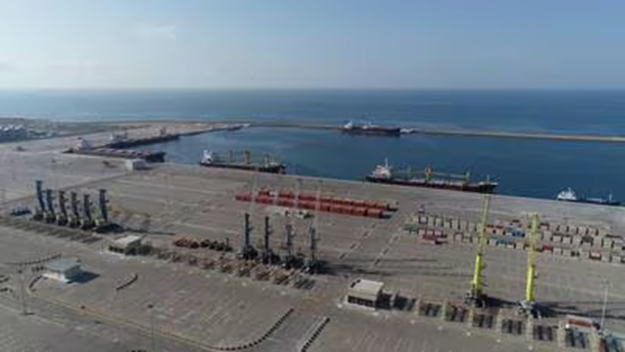
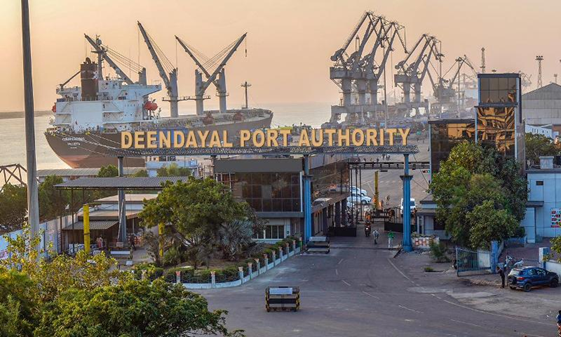
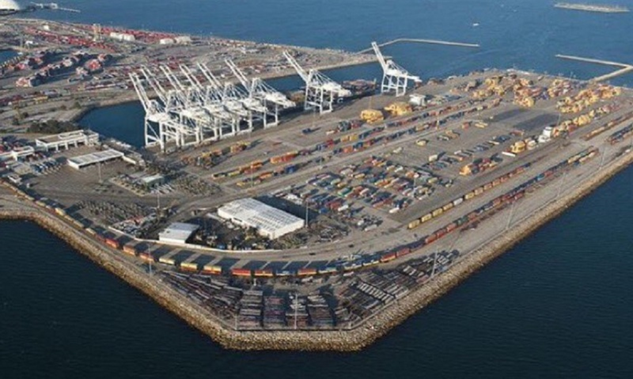
Chabahar Port, located on Iran’s southeastern coast along the Gulf of
Oman, is one of the country’s most strategically significant maritime gateways.
The port serves as Iran’s only ocean-facing deep-water port outside the Strait
of Hormuz and plays a crucial role in regional trade and connectivity. For
India, Chabahar holds particular strategic importance as it provides direct
access to Afghanistan and Central Asia while bypassing Pakistan. India has
invested substantially in the development and operation of parts of the port as
part of its broader regional connectivity initiatives.
The destruction of infrastructure at the port could
raise concerns over maritime security and the continuity of commercial
operations, although there has been no official indication of disruptions to
cargo handling activities.
The latest exchange
has intensified the legal and diplomatic debate over the protection of dual-use
infrastructure during armed conflict.
While Iran maintains that Chabahar is a civilian commercial port and
that the attack violated the UN Charter and international humanitarian law, the
United States argues that the targeted surveillance tower constituted a
legitimate military objective because of its alleged use by the IRGC for
intelligence and maritime surveillance.
The incident marks another flashpoint in the ongoing confrontation
between Washington and Tehran, with potential implications for regional
security, global shipping routes, and commercial traffic through the Gulf of
Oman and the Strait of Hormuz.
Shipping and trade stakeholders will closely monitor
developments, given Chabahar’s growing role in regional logistics and its
strategic significance for India’s connectivity ambitions with Afghanistan and
Central Asia.