


India, Germany to Sign Rs 90,000 Crore Submarine Deal Soon, Says German Envoy
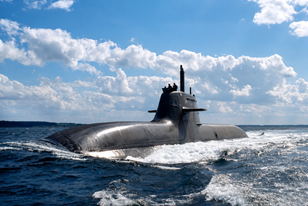
The deal, valued at over €8
billion, will see six advanced Type-214 conventional submarines built in India
for the Indian Navy. The agreement will be executed through a partnership
between Germany’s ThyssenKrupp Marine Systems and India’s Mazagon Dock
Shipbuilders, combining indigenous construction with technology transfer to
strengthen India’s submarine fleet.
Speaking on the sidelines of
an industry event organised by the Indo-German Chamber of Commerce, Ackermann
told reporters he was very hopeful and confident the deal would be signed very
soon, possibly within the next month. He described the submarine programme as
the most visible sign of deepening India-Germany defence cooperation, noting
that collaboration between the two countries’ armed forces has broadened
alongside growing defence industrial ties. The Type-214 is an advanced diesel-electric
attack submarine equipped with Air Independent Propulsion technology, allowing
it to remain submerged for extended periods of up to two weeks without
surfacing, making it harder to detect and better suited for long-range
underwater missions. Technology transfer terms under the deal are expected to
push local content on the final vessel up to 60 percent.
Project-75I is considered one
of the Indian Navy’s most significant modernisation programmes, aimed at
replacing an ageing submarine fleet with next-generation vessels offering
improved stealth, longer underwater endurance and stronger combat systems. The
agreement would also secure a substantial long-term order pipeline for Mazagon
Dock Shipbuilders’ Mumbai facility.
The
submarine programme has become a key marker of India-Germany defence industrial
cooperation, reflecting a broader shift from symbolic engagement toward
substantive joint production and technology partnerships between the two
countries.
Related News