

AI boom puts shipowners in race with tech giants for engines
The Korean shipbuilding giant has just signed a KRW956bn ($676m)
agreement with US energy infrastructure developer Corban Energy Group to supply
1,000 MW of generating capacity for American AI data centres. The equipment will be based around HD
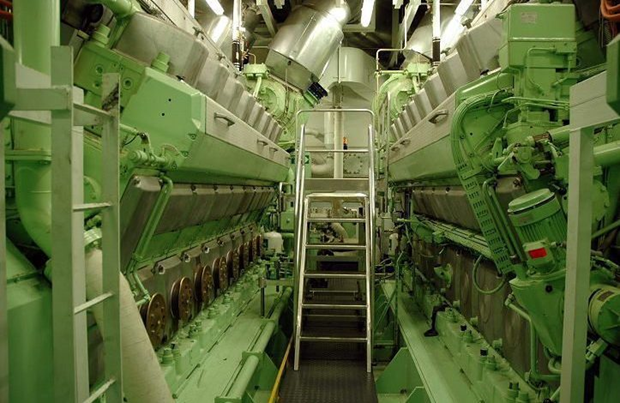
Hyundai’s 9.6 MW HiMSEN medium-speed engines, technology developed primarily
for ship propulsion and onboard power generation. The record order followed a KRW627.1bn US
data-centre engine contract secured in April, meaning HD Hyundai has booked
around KRW1.6trn of American data-centre power equipment in just four months.
Data-centre developers have been searching for
alternatives to conventional gas turbines, where lengthy lead times have
emerged as a major constraint. Medium-speed
engines can be deployed comparatively quickly and grouped together to provide
hundreds of megawatts of dependable power.
Korea’s yards increasingly see AI as a much broader opportunity than
selling engines ashore. Samsung Heavy
Industries and HD Hyundai are both pursuing floating data centres, where
servers are housed on offshore platforms or vessels, reducing dependence on
expensive land while allowing seawater to contribute to cooling. Samsung Heavy
has secured approval in principle for floating data-centre concepts from
classification societies and is working with AI server specialist Supermicro
and ABB. It has also signed a design and production agreement with US
data-centre developer Mousterian. HD
Hyundai has established its own dedicated organisation and teamed up with
Schneider Electric to develop integrated power and cooling infrastructure.
Hanwha Ocean is also reviewing opportunities, completing Korea’s big-three push
into the sector.
The attraction is obvious. Up to $3trn is expected
to be invested in AI data-centre infrastructure by 2030, according to Moody’s,
while future floating facilities could range from 50 MW to 500 MW and
eventually link directly to offshore wind farms or floating small modular
reactors.
There is another side to the AI boom. Splash reported in June that
engine availability was already becoming a constraint at some shipyards,
echoing conditions during the 2007 ordering frenzy. The tightest market is for dual-fuel
low-speed main engines, but pressure has also emerged for auxiliary diesels,
generator sets and turbochargers — equipment where marine demand increasingly
overlaps with the requirements of data centres. Wärtsilä has announced production capacity
expansions equivalent to 65% of its 2025 capacity, citing demand from both
marine and energy customers.
Rolls-Royce is more than doubling US production capacity for mtu Series
4000 generator sets compared with 2024 levels as data-centre demand surges,
while Accelleron delivered a record 8,000 TPX44 turbochargers for data-centre
and critical infrastructure
applications last year, more than three times the previous year’s output.
Adam Kent, managing director of Maritime Strategies International, told
Splash that engine availability was already affecting yard output, although
primarily by pushing deliveries further out rather than preventing orders
entirely. “We’ve certainly heard that the availability of engines is having an
impact on some yards,” Kent said. Arrow
research head BurakCetinok was more cautious, arguing there was no widespread
shortage materially disrupting overall shipbuilding output, although newer and
reactivated yards were more exposed because they were effectively “joining the
back of the queue”.
SSY research chief Roar Adland also suggested market incentives should
eventually unlock additional licensed engine production in China.
Related News