

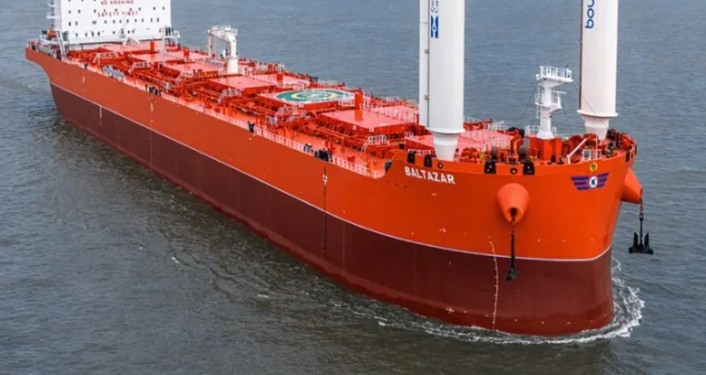
KCC takes delivery of wind-assisted combination carrier Baltazar
The combination
carrier is the third and final contracted vessel in the CABU III series and
takes the shipowner’s tally of CABU vessels to 11 and its total fleet of
combination carriers to 19. The vessel
is designed to ship caustic soda solution to Australia from Asia, mainly China, for the
production of aluminum and to switch seamlessly to the carriage of a range of
bulk ores including aluminum, bauxite, iron
ore and grain on the return voyage.
The Baltazar has a carbon footprint 35% lower than
first-generation CABU vessels and a 20% higher earnings potential, the company
said. Like its two sister
vessels, Balder and Bastion, Baltazar has
an air lubrication system, a shaft generator, an EcoEGR fuel-optimised engine
and a Mewis Duct from Germany’s Becker Marine Systems. Unlike its two sisters,
however, the latest vessel in the series is the first to harness the power of
the wind, with two bound4blue eSAIL suction sails. The ship is also ready for
retrofitting to use zero or near-zero fuels in the future.
As hybrids, combination carriers are more
expensive than either bulk carriers or tankers. But their ability to ship both
dry and liquid bulk cargoes means that they achieve high load factors. They
also have a greater earnings potential because they spend only a small amount
of time in ballast. KCC, the largest combination carrier owner
in the world, also has eight CLEANBU vessels, designed to ship clean petroleum
products and dry bulk cargoes.
Related News