




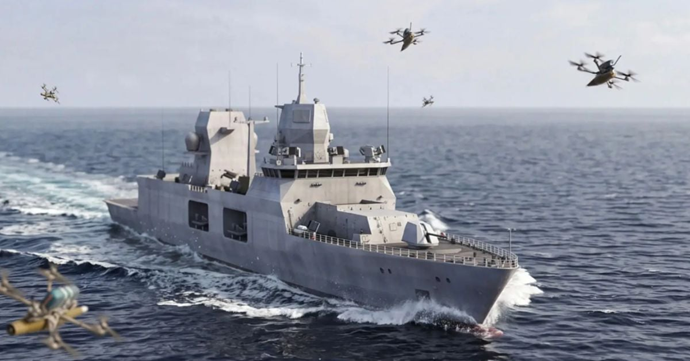
New Ship-Mounted Weapon System Passes 48 Tests To Protect Naval Vessels from Drone Attacks
The counter-drone system can be mounted on vessels
and was developed by Mehler Production in about 18 months and subjected to more
than 48 trials. The German Company tested the system called SCILT NAVAL on different parameters,
including transmission of data, behaviour of ammunition and its ability to
withstand rough conditions at sea. It was also exposed to saltwater and other
stressful situations which are common on warships. The range of target
engagement was also evaluated and was then used to refine its functioning. Drones have changed the nature of naval
warfare by offering efficiency at lower prices compared to missiles. Hence,
many defence companies are coming up with new models of drones. The SCILT NAVAL
is one such drone which can target missiles and aircraft before they can reach
a ship, but its effectiveness might differ depending on the distance of the
threat from the ship. The drone system
can be deployed close to ports, narrow channels, rigs, floating platforms
operated by navies and risky naval missions.
The system can be installed on different kinds of ships, such as small
craft which may not have air defences. It can engage individual targets as well
as drone swarms during attacks by dividing the response into stages. It can use different kinds of ammunition
depending on the requirement, such as those that can even pierce armour. The
ammunition is loaded automatically by the system and has greater efficiency than
human operators would have when making decisions regarding the final
engagement. SCILT NAVAL can be linked
to a vessel’s command and control system and can also work independently with
the help of its sensors and other components.

Related News