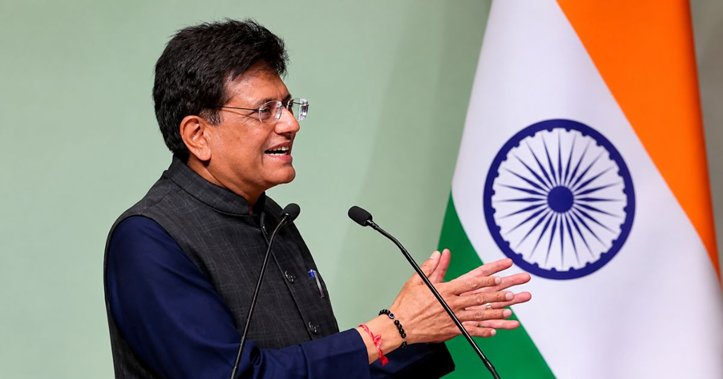
Goyal sets 31 March 2027 deadline for online trade approvals
Goyal announced the timetable
on 4 November 2026 at the virtual inauguration of Vanijya Bhawan and Udyog
Bhawan in Jaipur. Jaipur is the first state capital to bring the Ministry of
Commerce and Industry’s departments and affiliated offices together at one
location. Goyal called for similar centres in other state capitals to help
businesses obtain trade and investment advice. Goyal directed officials to move the full
application process online, including approvals for exports of Special
Chemicals, Organisms, Materials, Equipment and Technologies (SCOMET). He also
asked DGFT regional authorities to digitise past records and called on the
departments to simplify their forms and procedures. Where officials need to inspect an
original document, Goyal proposed dedicated counters with computers at office
entrances. Staff could check the original and upload it during the same visit.
He also encouraged wider use of self-certification. Exporters can already use the DGFT portal
to apply for and receive approvals under the Advance Authorisation and Export
Promotion Capital Goods schemes, as well as status holder certification.
Businesses can also raise grievances with officials by video through the
ministry’s Jan-Sunwai service.
Certificates of origin offer a practical example of how the process has
changed. Electronic filing became compulsory for non-preferential certificates
on 1 January 2025. The system allows several authorised employees to work under
one Importer Exporter Code, sign applications electronically and request
corrections to certificates already issued. Exporters can also obtain certificates
for goods of foreign origin being re-exported through India by providing
documentary evidence from the country of origin. In September 2026, DGFT added a link that
allows eligible exporters to submit certificate applications directly from
their accounting or business management software. An exporter can transfer data
already held in its own system, track the application and receive the
certificate. The facility covers both preferential certificates, which support
claims for tariff concessions under trade agreements, and non-preferential
certificates used for customs and other trade requirements. The ministry has approximately 500 offices
across 46 organisations. Goyal said most offices would come under the plan to
share premises. He asked the Department of Commerce and the Department for
Promotion of Industry and Internal Trade to coordinate services so that a
business approaching one centre could obtain help from across the
ministry.
For a manufacturer seeking
export guidance, the proposed arrangement would provide access to a specialist
even if the relevant organisation has no officer stationed locally. Goyal
directed centres to offer video links to officials elsewhere and to provide
additional counters according to local demand. As licensing moves online, he
wants staff at the centres to devote more time to helping businesses develop
exports, access investment support and expand operations.
Related News