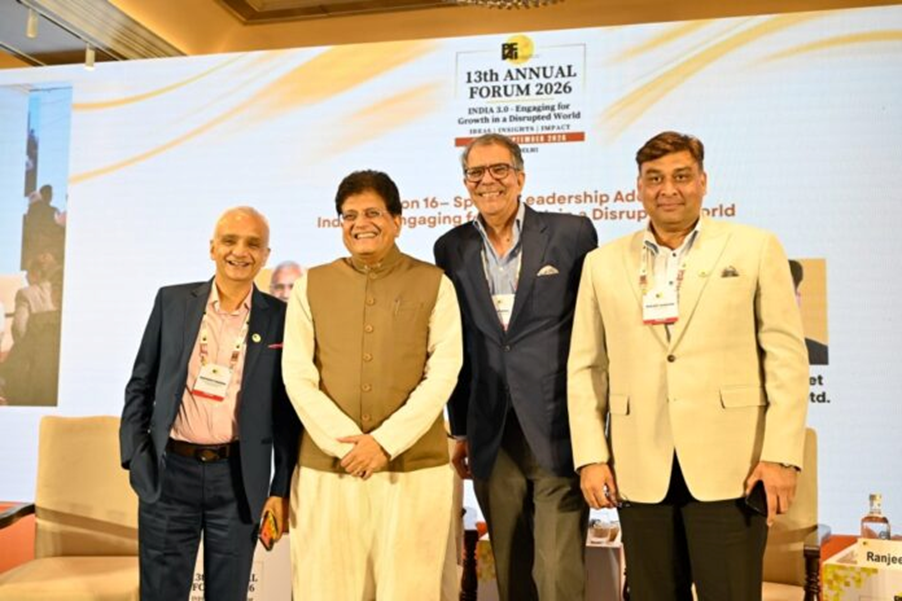
Piyush Goyal highlights India’s expanding Global Economic Engagement and growing integration with global value chain
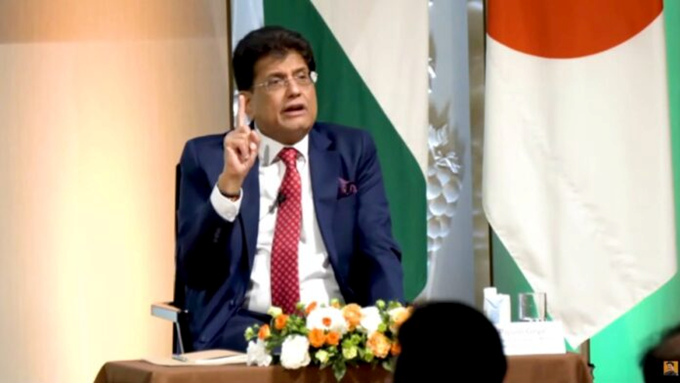
Shri Goyal said
India today negotiates with the world as a $4 trillion economy, while its
economy on a purchasing power parity basis is around $20 trillion, making it
the third largest in the world. He said the gap between these measures would
narrow as India progresses towards the vision of becoming a $30 trillion
economy. The Minister said India’s
approach to trade negotiations reflects the country’s changing economic
position and its objective of strengthening integration with global markets. He
highlighted the potential for broader economic partnerships to facilitate
seamless flows of goods, services, tourists, educational institutions and
sports. Shri Goyal said ongoing
negotiations include engagements with Canada, Chile, Peru, the Southern African Customs Union (SACU),
Mexico, Maldives, Eurasia, Central Asia, Russia, the Gulf Cooperation Council
(GCC) and Israel. He said these engagements are aimed at expanding
opportunities for India to participate in global value chains and supply chains and facilitating
the movement of goods and services. The
Minister said India’s semiconductor consumption demand is expected to grow to
over $150 billion annually in the next five years. He also highlighted the need
to develop capabilities across the AI ecosystem, including large language
models and agentic models. The
Minister also highlighted the growth of India’s startup ecosystem. He said that
when Startup India was launched, the country had around 400–500 startups, while
India has since become the world’s third-largest startup ecosystem, with more
than 120 unicorns. Shri Goyal said the
focus is now on innovation and promoting Indian startups in the deep-tech
ecosystem. He also highlighted India’s emergence as the third country to have a
rocket launched into space by the private sector. The Minister said India’s young population
is increasingly informed about global developments and opportunities and
expressed confidence in the ability of the youth to make informed choices about
their future.

Related News