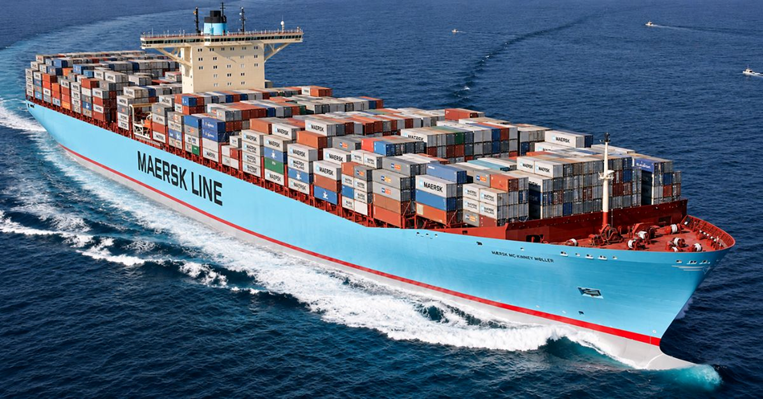
Maersk removes heavy-load surcharge on northwest India–Europe contract shipments
The announcement, issued on 6 November, sets the
applicable HWS rate at zero. It gives exporters using the specified gateways a
reduction in this component of their shipping charges, while other applicable
freight-related charges continue.The advisory specifies 20-foot dry containers,
identified by Maersk’s equipment code 20DRY, on the following routes:
|
Loading ports |
Destination regions |
Weight category |
Revised HWS |
|
NhavaSheva,
Mundra, Pipavav and Hazira |
North
Europe and Mediterranean |
VGM
above 22 tonnes |
Zero |
Eligibility is restricted to contract bookings.
Local charges, contingency charges and other applicable surcharges remain
payable. The withdrawal therefore changes a specific tariff component rather
than establishing a new all-inclusive freight rate.Maersk applies the revision
using the Price Calculation Date (PCD). For the non-spot bookings covered by
the advisory, this means the scheduled departure date of the first water leg
recorded when the booking is confirmed.The relevant date is therefore linked to
the confirmed sailing schedule, rather than simply the date on which an
exporter requests a quotation or submits a booking.Maersk announced the
introduction of the charge on 23 June 2026, with implementation from a PCD of 7
July. That advisory covered the same four northwest Indian loading ports and
shipments to Europe and the Mediterranean.The earlier measure applied to
20-foot dry containers exceeding 22 tonnes gross weight. The latest
announcement reverses that charge approximately four months after its
introduction.The June advisory also linked the charge to the container’s
verified gross mass, making the weight of the complete packed unit relevant to
the surcharge calculation.VGM covers the cargo, packing and securing materials,
and the empty container’s tare weight. It is therefore different from the net
weight of the goods alone.Under the International Convention for the Safety of
Life at Sea (SOLAS), shippers are responsible for providing verified container
weights sufficiently early for vessel stowage planning. The requirement took
effect on 1 July 2016.The International Maritime Organization permits two
verification methods: weighing the packed container, or weighing its cargo and
packing materials and adding the container’s tare weight through an approved
certified method.The commercial tariff change does not remove the obligation to
provide accurate weight information. VGM remains a condition for loading packed
containers aboard ships covered by SOLAS.Accurate mass information supports
safe stowage and stacking, helping prevent container-stack failures and cargo
losses. A container whose verified weight is unavailable in time for
preparation of the stowage plan can be denied loading.For exporters and freight
forwarders, the practical distinction is between pricing and cargo acceptance:
the heavy-load charge becomes zero for qualifying bookings, while weight
verification and vessel-loading requirements continue to apply.
Nov 9
Related News