Somali Piracy Resurgence: Understanding The Risk To Commercial Shipping
After a lull
in piracy from 2012 to 2024, when incidents were limited to zero or a couple
per year, piracy has begun to increase since 2024. This rise has accelerated
further so far in 2026. The rise in piracy is driven by state weakness and
diverted international naval efforts, which have increased pirates’ ability to
operate. Moreover, weapons and finance networks that connect Iran’s Islamic
Revolutionary Guard Corps (IRGC) logistics with Al-Shabaab, Houthis, and Pirate
Action Groups (‘PAGs’) also incentivise piracy. Pirate activity represents a
significant threat to commercial operations, both in Somali territorial waters
and offshore. The financial objective of Somali pirates is to hijack vessels
and then pressure the relevant stakeholders into providing the group with a
ransom payment in exchange for the return of the crew/vessel. As the Houthis
also play a major role in this network, they also assist pirate activity,
especially in the Gulf of Aden. With the monsoon season recently ending,
pirates have favourable weather conditions to use motherships to attack
commercial vessels at a significant distance from the coast (up to several
hundred nautical miles). In the late 2000s, piracy emerged as a significant
issue in the Gulf of Aden and the Somali basin. At its peak, in 2011, over 230
attacks were recorded, with piracy costing shippers and governments around $7
billion during this period. The resurgence of piracy since 2024 threatens to
similarly increase the costs to shippers and governments. In the period between January to September
2026, the International Maritime Bureau recorded a rise in Somali piracy
activity, with 15 recorded incidents of Somali piracy. They also note that
Somali pirates accounted for 94% of all crew taken hostage globally. The
figures from international anti-piracy missions indicate that the rate of
piracy incidents is likely even higher. On 24 August 2026, the Royal Navy
reported that the international anti-piracy mission, Combined Task Force 151,
had responded to 25 piracy-related incidents between 24 February and 24 August
2026.
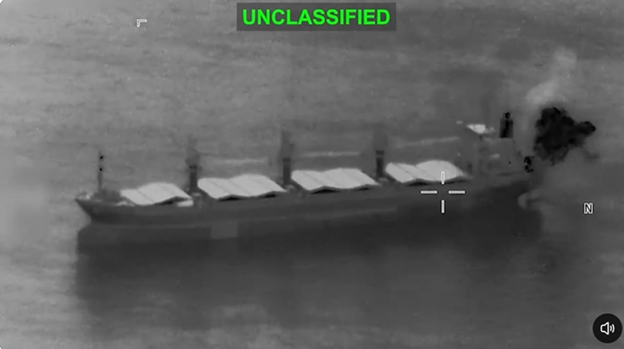
As of early November, the following successful
hijackings/armed robberies have been recorded in the region:
- 15
Recorded Somali piracy incidents
Jan-Sep 2026 | IMB - 94%
Share of crew taken hostage globally
Attributed to Somali pirates | IMB - 25
Piracy-related incidents handled
24 Feb-24 Aug 2026 | CTF 151
Consistent
with historical trends, most piracy occurs in littoral areas because commercial
vessels are easier to reach in these areas. Nevertheless, there has been a
general increase in PAGs targeting highvalue tankers in the Gulf of Aden,
likely in coordination with the Houthis, due to the high ransom payments that
they can demand for these vessels. For example, Somali pirates are currently
demanding $10 million in ransom for the release of the EUREKA and its crew.
Stakeholders regularly struggle to pay these high ransom amounts. Consequently,
an estimated 20 crew members, belonging to at least one vessel, remain hostage.
This includes crew members that have been held several months after the
hijacking date, including the crew of ASANA.
During the recent surge in piracy, pirates have increased their use of
large vessels as motherships (e.g. the cement carrier SWARD was repurposed as a
mothership). Even though Somali pirates engage in cooperation with Al-Shabaab
and the Houthis, the selection of targets does not demonstrate a clear pattern,
as hijacked vessels have had a wide range of ownership. The recent hijacking of
SIBU 1 shows this. Since the hijacking, its missing flag data has led to it
continuing to be classified as having indeterminate ownership, although the
vessel is believed to be part of the Iranian shadow fleet. Over the last few years, the Somali
Federal Government’s longstanding weaknesses in exerting control have further
deteriorated, creating ideal conditions for piracy. In early 2026, officials in
the South-West state announced their intention to sever ties with the Federal
Government. This decision was primarily motivated by President Hassan Sheikh
Mohamud’s constitutional reforms to extend the presidential term, along with other
changes. From the perspective of officials in the South-West state, and many
others in the country, Mohamud’s reforms are an effort to restrict democracy. After the South-West state announced its
desire to sever ties, the Federal Government seized control of Baidoa, the
state’s administrative capital, in March 2026. Even after the government seized
the city, intermittent clashes have continued in the city’s outskirts between
the federal government and forces aligned with the state government. The potential
loss of the South-West state poses a significant risk to the Federal
Government’s authority, especially as it mirrors similar independence movements
in recent years. For example, in 2024, the semi-autonomous state of Puntland
announced it would begin operating independently of the federal government. In
addition to these state-level secessionist movements, the federal government
faces an ongoing threat from Al-Shabaab. Despite continued military operations
against the group, Al-Shabaab remains in control of around 30% of Somalia,
mainly in the south. With these multifaceted security threats, the government
has been unable to adequately allocate resources to anti-piracy missions. Furthermore, the increased commercial
traffic in the Somali basin has created increased opportunities for piracy to
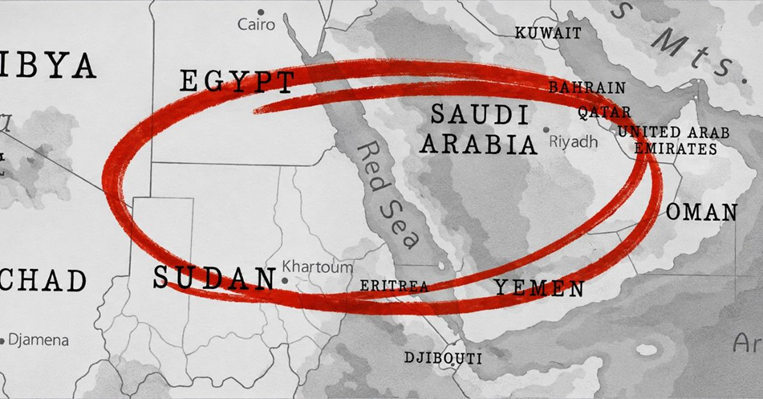
occur due to the increased volume of potential targets. The twofold maritime
disruptions of Houthi attacks on the Red Sea and IRGC attacks on commercial
shipping in the Strait of Hormuz have caused a growing number of ships to
reroute via the Cape of Good Hope and via the northeastern coast of Somalia.
This rerouting has placed a higher percentage of vessels within the range of
Somali pirate attacks. Conversely, vessel transits in the Bab el-Mandeb Strait and
the Gulf of Aden have declined by 60-70% in recent months, primarily as many
shipping companies have bypassed this route due to the threat levels. .In response to the situation in the
Strait of Hormuz and the Red Sea, anti-piracy naval missions have reduced their
scope. Various high-end units have been diverted from combating piracy to these
other theatres. The primary international anti-piracy task force is the
Combined Task Force 151, which operates broadly throughout the region.
Moreover, the European Union’s anti-piracy mission, Operation ATALANTA, is also
present in the region, and participates in coordinated exercises/patrols with
the Combined Force 151. This mission’s mandate extends until February 2027. The
EU is yet to confirm whether it will be extended beyond this date. However, it
will likely be renewed due to the high rates of piracy. While these missions
play a valuable role in addressing piracy, they have failed to prevent the
current increase in piracy. In the
anti-piracy missions in 2011, and the following several years, piracy was
nearly eliminated by the operation of up to 30 warships simultaneously
operating through three overlapping missions. Contrastingly, the EU’s Operation
Atalanta is limited to roughly two vessels and air assets deployed
simultaneously, while some Combined Task Force 151 assets have been diverted to
the Strait of Hormuz and Red Sea. Although the extent of the diversions is
currently unknown. The reduced scale of these missions has prevented them from
effectively covering the wide geographic area where piracy occurs. In recent
months, the resource limitations have worsened as ship diversions have caused
vessels to undertake fewer dedicated escort or patrol days in the traditional
IRTC/Somali Basin area. In response
to these issues, countries adhering to the Djibouti Code of Conduct Task Force
signed a proposal in July 2026 to establish a task force to enhance existing
anti-piracy efforts. The exact scope and details of this task force are still
being determined. Somalia signed a
pivotal 10-year bilateral Defence and Economic Cooperation Agreement with
Türkiye in 2024, which includes Turkish assistance in anti-piracy measures.
Although this agreement can help with piracy to an extent, it cannot
comprehensively combat piracy. Turkish anti-piracy assistance does not replace
ongoing missions, as it mainly relates to hostage recovery. Unlike
international anti-piracy missions that seek to deter and proactively stop
pirate activity through an ongoing presence.
Currently, the risk to shipowners, charters, and underwriters is significant in
the Gulf of Aden and the Somali Basin, with multiple crews held and regular
pirate activity in these waters. In the near-term, this risk is expected to
heighten further. The recent Houthi activity in Yemen indicates the increasing
dual threat environment in the Gulf of Aden. In September 2026, Houthi forces
launched a major operation throughout southwestern Yemen wherein they captured
around 5,400 square kilometres of territory along the strategically significant
southwest coast. The Houthis’ seizures include the valuable port city of Mocha,
which is located around 80km north of the Bab el-Mandeb, and Perim Island
within the Bab el-Mandeb strait. With the Houthis improved strategic position
on the Bab el-Mandeb, they will likely seek to coordinate with Somali pirate
groups to solidify the dual threat environment. The Houthis can utilise
cooperation with PAGs to disrupt shipping along the Gulf of Aden and disrupt
the southern entrance to the Bab el-Mandeb, especially vis-à-vis Saudi Arabian
shipping. In doing so, the Houthis can enhance their capacity to extract
concessions from Saudi Arabia. However,
the Houthis control over the Bab el-Mandeb has been constrained to an extent by
the Saudibacked Presidential Leadership Council’s (‘PLC’) Operation Dawn of
Yemen. Launched in September 2026, the operation has recaptured key areas along
the Bab el-Mandeb, including the port city of Mocha on 5 October 2026. Houthi
forces have denied PLC claims that they recaptured the city. Additionally, on 6
October 2026, Türkiye and Pakistan announced they are sending troops to assist
Saudi Arabia in the conflict, in accordance with their mutual defence
agreement. As these forces will concentrate their efforts on Yemen and the
northern side of the Bab el-Mandeb Strait to repel the Houthis, it may
facilitate a further increase in piracy; this is especially the case if Turkish
resources are diverted from Somalia to Yemen.
Over the next few months, anti-piracy mission will affect the risk to
commercial shipping. While the European Union will likely renew Operation
ATALANTA beyond February 2027, the mission’s scale will influence the piracy
threat. If the EU increases the number of assets deployed as part of this
mission, it will assist in addressing the continued issues with the diversion
of Combined Task Force 151 resources. Even though Operation ATALANTA and
Combined Task Force 151 continue to play an important role in antipiracy
operations, they cannot address piracy alone. Throughout 2026, the Somalian
Government has repeatedly called on greater coordinated international action to
address the rise in piracy. Thus far, these appeals have been largely ignored;
instead, the international community continues to overlook piracy in favour of
other pressing geopolitical concerns.
Ostensibly, the newly formed Djibouti Code of Conduct Task Force
(consisting of 22 signatory member states across the Western Indian Ocean and
surrounding regions), is an answer to these requests. However, it is unlikely
that the mission will be sufficient to address the shortfall in anti-piracy
resources. The signatory states, in general, lack the economic or naval
resources to divert to addressing piracy at the required scale.
Ultimately,
owners, charterers, and underwriters face a high-risk environment. This is
largely driven by inadequate anti-piracy measures throughout the region and
expanded Houthi-pirate coordination, which has created a dual-threat
environment in the Gulf of Aden.
Related News