Dodgy owners start sending sanctioned tankers to the subcontinent
As the sanctions net tightens and the
European Union (EU) prepares a full maritime services ban on ships carrying
Russian oil, a further 43 shadow fleet tankers have been sanctioned by the EU,
bringing the total to 640 vessels.
The full ban replaces the series of oil price caps that have dated from
the end of 2022. The caps have allowed G7 countries to ship Russian oil
provided that is sold below fixed price caps. Now, the full service ban narrows
employment opportunities still further.
Meanwhile, uncertainty surrounds India’s
position on buying Russian crude. Speaking yesterday at the Munich Security
Conference, US Secretary of State Marco Rubio said that India had committed to
stop buying Russian oil. But the country has previously said that its own
energy security will remain a key determinant.
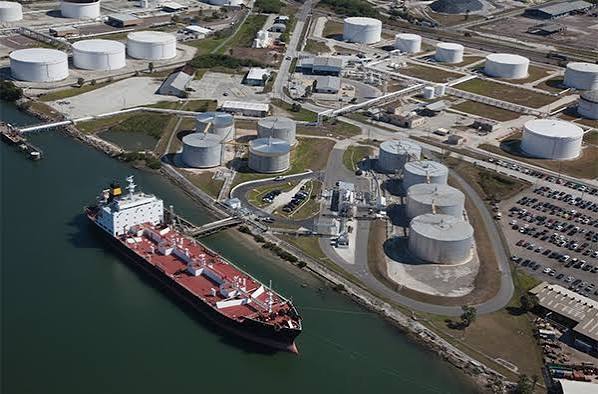
Unsurprisingly, the identity of the three
tankers that have arrived off Alang recently is hard to pin down as their
owners continue to operate under a shroud of secrecy. Seatrade has not been
able to confirm that the three vessels off Alang are the 1993-built Suezmax
Woodchip, that has been flying the flag of Gambia, the 106,550dwt Bodhi, built
in 1997 and flying the Cameroon flag, and the 1999-built product tanker, Global
Star, which is flying the Tonga flag and is thought to have arrived off Alang
last Friday.
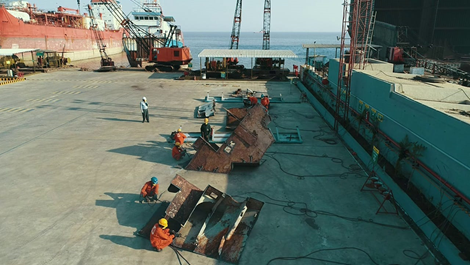
On recycling prices, demo markets remain weak though analysts believe
the success of the Bangladesh election
could be a significant positive, as a range of construction projects requiring
steel and currently on hold, could boost the recycling market. Also, the
Bangladesh Ship Breakers and Recyclers Association has now adopted the
requirements of the International Ready for Recycling Certificate, already in
place in India and Pakistan and requiring ship sellers to disclose fully the
inventory of hazardous materials on board.
Describing prices as steady, GMS, the world’s largest cash buyer of
end-of-life ships, reckons that Pakistan facilities lead the price table, with
container ships at around $450/ldt, tankers $440, and bulkers at $430.
Bangladesh comes next, with tankers typically getting $10 less, and bulkers
down a further $20. Indian prices are down another $10 across the board
Meanwhile, Aliaga in Turkey has gained
some ground recently as a destination that avoids the requirements of the Basel
Convention – the trans-boundary movement of hazardous waste. It is proving an
interesting option, therefore, for some EU-based owners despite significant
lower indicative prices of $290, $280,
and $270, respectively.
Related News