

Office Address
123/A, Miranda City Likaoli Prikano, Dope
Phone Number
+0989 7876 9865 9
+(090) 8765 86543 85
Email Address
info@example.com
example.mail@hum.com


123/A, Miranda City Likaoli Prikano, Dope
+0989 7876 9865 9
+(090) 8765 86543 85
info@example.com
example.mail@hum.com
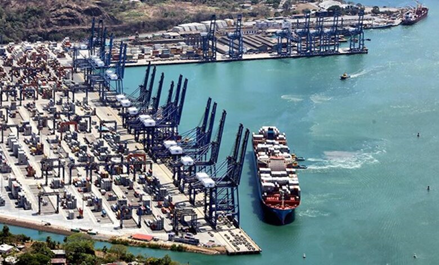
In late January, Panama’s Supreme Court annulled CK Hutchison’s
contracts to run the Cristobal and Balboa terminals on either sides of the
country’s terminals, facilities the Hong Kong conglomerate has run since
1997. To the north, since
returning to power last year, US president Donald Trump has made no secret of
his ambition to see Panamanian maritime infrastructure become more aligned with
American interests. The Supreme
Court ruling six weeks ago immediately provoked diplomatic and commercial
ripples. Beijing warned of “heavy prices” and reportedly ordered state firms to
pause new Panama projects, while Chinese customs stepped up inspections of
Panamanian imports.
An opinion piece
published in state-run China Daily last
month argued the Supreme Court decision was “a textbook case of how external
pressure can corrupt judicial independence and undermine the foundations of
international investment”.
Earlier this week, officials from MSC and Maersk
were called into the Ministry of Transport, while Panamanian newspaper La Prensa is now reporting that China’s
state-run shipping giant COSCO has ceased all calls at Balboa. Vessel tracking
services show no COSCO ships – or vessels belonging to its subsidiaries – at
the port today.
For its part, CK Hutchison’s Panama Ports Company (PPC) has launched
international arbitration seeking at least $2bn in damages.
In a statement filed March 6, PPC said it has formally submitted claims
under the ICC arbitration rules, accusing Panama of an “illegal national
takeover,” “egregious breaches” of contract and “manifestly anti‑investor
conduct.” The company warned it “will not give ground” and “will not accept
symbolic compensation,” saying it will pursue “all rights and damages to which
it is entitled.” PPC also said it is pursuing parallel local remedies and has
asked Panamanian authorities to return documents and materials it says were
unlawfully seized during the takeover.