

Office Address
123/A, Miranda City Likaoli Prikano, Dope
Phone Number
+0989 7876 9865 9
+(090) 8765 86543 85
Email Address
info@example.com
example.mail@hum.com


123/A, Miranda City Likaoli Prikano, Dope
+0989 7876 9865 9
+(090) 8765 86543 85
info@example.com
example.mail@hum.com
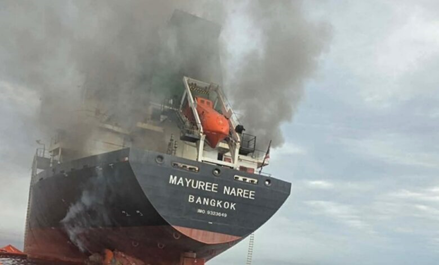
The most severe attack
today was against the Precious Shipping-controlled, Thai-flagged Mayuree Naree, which was struck by a projectile north
of Oman in the strait, resulting in a fire and crew evacuation procedures. The
fire was extinguished after a number of hours.
The Japan-flagged 6,724 teu ONE Majesty also sustained damage in a separate
attack with the ship’s master reporting that the vessel suffered a 10 cm hole.
The boxship has since made towards a safe anchorage. All crew members are safe
and accounted for.
Star Bulk’s Marshall Islands-flagged kamsarmax bulk
carrier Star Gwyneth was also hit, northwest of Dubai,
causing damage to the hull, with all crew reported safe on what is turning out
to be one of the most dangerous days for commercial shipping since Tehran was
attacked.
US military forces reported overnight that they
have eliminated multiple Iranian naval vessels, including 16 minelayers, near
the Strait of Hormuz.
US president Donald Trump took to social media yesterday (10 Mar) to
urge Iran to remove any sea mines that it may have placed in the strait.
For international shipping – and the global economy as a whole – the
focus is now on how long this war will last.
“For now, the key variable is duration,” analysts at Greek broker
Xclusiv stated in a new report. “Shipping history offers sharply contrasting
precedents: the 1967 closure of the Suez Canal triggered a multi-year tanker
boom, while the 1973 oil crisis ultimately destroyed demand. If the Hormuz
disruption proves temporary, the immediate effect could be strongly supportive
for tanker earnings and asset values. But if the conflict evolves into a
prolonged regional war, the risk shifts from supply shock to macroeconomic
damage. In shipping, the difference between those two outcomes is the difference
between a freight windfall and a demand collapse.”