

Office Address
123/A, Miranda City Likaoli Prikano, Dope
Phone Number
+0989 7876 9865 9
+(090) 8765 86543 85
Email Address
info@example.com
example.mail@hum.com


123/A, Miranda City Likaoli Prikano, Dope
+0989 7876 9865 9
+(090) 8765 86543 85
info@example.com
example.mail@hum.com
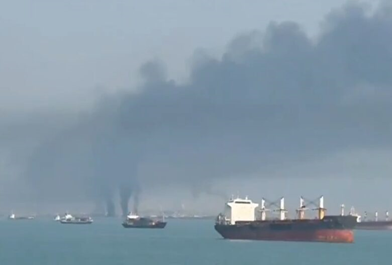
The Clarksea Index – Clarksons Research’s weighted barometer covering
all commercial shipping segments – on Friday hit an all-time high of
$53,3190 a day exceeding $50,000 a day for only the third time. Both previous
instances were at the height of the 2007/08 boom, and Friday’s stellar figure
compares to a robust average across 2025 of $26,836 per day. “Alongside huge operational risk and
stress, shipping markets are seeing ‘disruption upside’ for the moment,”
Clarksons noted in its latest weekly report.
Meanwhile, oil prices eclipsed $115 per barrel for
the first time since 2022 on Monday, with key energy outlets in the Middle East
having issued force majeures, including BABCO, Bahrain’s oil company, Kuwaiti
ports, and Qatar’s Ras Laffan.
The 16-year-old,
Embiricos-owned Kalamos VLCC made history on
Friday when it was fixed by Bharat Petroleum Corp for a stunning world record
rate $770,000 per day, however analysts are suggesting the incredible VLCC boom
could be short-lived if the Strait of Hormuz remains paralysed for a long
period.
Persistent lost volumes may trigger market
pressures, Clarksons suggested, with the Baltic Exchange’s spot VLCC rates
retreating towards the end of last week.
Tanker broker Poten & Partners described the situation around Hormuz
as “not sustainable” in its latest weekly report.
“Eventually, the tankers waiting outside will leave the area to look for
employment elsewhere,” Poten forecasted. “Middle Eastern producers will
increasingly be forced to shut in production and lower global oil flows will
dent ton-mile demand. Under this scenario, tanker rates will come under severe
downward pressure.”
Shipping analysts at SEB, a Scandinavian bank,
predicted that with the Persian Gulf remaining effectively closed, more and
more open vessels will ballast towards the Atlantic to lift cargoes there,
eventually overpopulating that market and weighing on rates.
The ongoing conflict has taken the lives of
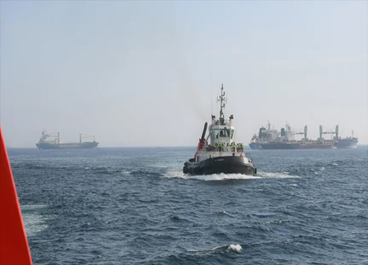
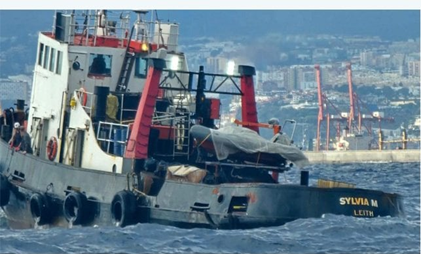
seafarers in the region. A tugboat providing assistance to the attacked Safeen Prestige containership came under attack itself on Friday, leading
to the loss of at least four crewmembers.
Secretary-general of the International Maritime Organization, Arsenio
Dominguez, has called once again for international shipping not to be targeted.
“This is unacceptable and unsustainable. All
parties and stakeholders have an obligation to take necessary measures to
ensure the protection of seafarers, including their rights and well-being, and
the freedom of navigation, in accordance with international law,” Dominguez
said on Friday.
One of the reasons for the paralysis seen in the Middle East has been
the lack of reasonably priced insurance, something the US has moved to
alleviate.
The US government unveiled on Friday(6 Mar) a $20bn reinsurance facility
through the Development Finance Corporation (DFC) to provide war‑risk and
political‑risk coverage. Launched by DFC chief Ben Black alongside treasury
secretary Scott Bessent under a presidential directive, the rolling facility
will insure losses up to about $20bn “for vessels that meet the criteria,” with
implementation coordinated with CENTCOM. Details on eligibility and partner
insurers remain limited, though the DFC said it has identified “best‑in‑class,
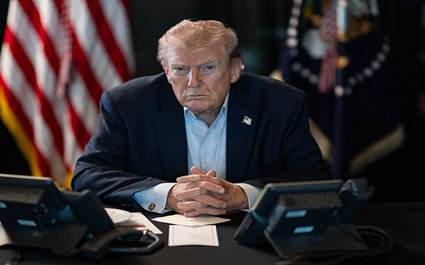
preferred American insurance partners.” President Trump also vowed naval
escorts if required.