




Office Address
123/A, Miranda City Likaoli Prikano, Dope
Phone Number
+0989 7876 9865 9
+(090) 8765 86543 85
Email Address
info@example.com
example.mail@hum.com


123/A, Miranda City Likaoli Prikano, Dope
+0989 7876 9865 9
+(090) 8765 86543 85
info@example.com
example.mail@hum.com
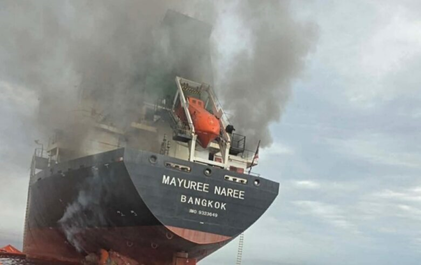
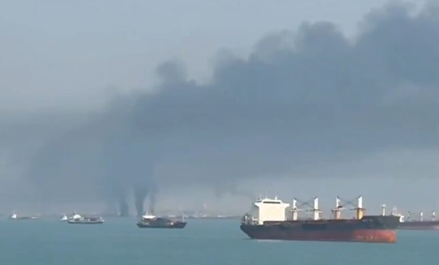
Ships are burning at sea — flames and thick dark
smoke rising into the sky.
Not warships. Not naval vessels.
Ordinary merchant ships carrying cargo for the global economy, with
civilian seafarers on board simply doing their jobs.
Following recent attacks on merchant vessels in the Strait of Hormuz,
the secretary-general of the International Maritime Organization, Arsenio
Dominguez, issued a statement expressing deep concern over casualties among
seafarers. He said attacks on innocent civilian shipping can never be justified
and reaffirmed that freedom of navigation remains a fundamental principle of
international maritime law. The words are correct. But we have heard them many
times before.
Every time merchant ships are attacked, or seafarers lose their lives in
geopolitical conflicts, the same kind of statements appear.
What is less clear is what these statements mean for the seafarer
standing watch tonight on the bridge.
Over the past few years, we have seen several situations where the
system that is supposed to protect seafarers simply did not work.
The covid period is a very good example.
During that time, governments insisted that
seafarers could not remain on board ships beyond twelve months. Port state and
local authorities were very strict in checking that crew contracts were within
the legal limits before allowing ships to operate.
At the same time, those very governments often refused to issue visas
for incoming crew or allow crew members to disembark. Ships trading in certain regions simply
had no practical way to change crews.
This created a strange and frustrating catch-22
situation. Authorities insisted that no seafarer should remain on board beyond
the permitted period, but the same system made it impossible for crew changes
to happen.
To keep vessels trading, many ships started operating with additional
people on board. Relief crew would join the vessel, but the seafarers who had
already exceeded their contracts were not allowed to leave. So they continued sailing as ‘passengers’.
On paper, the rules were followed. In reality, everyone knew the system was not
working. I remember one vessel during
that period arriving in port carrying the body of a seafarer who had died on
board. The crew had kept the body in the ship’s freezer and requested
permission to land it so it could be repatriated to the family.
The ship sailed from one port to another. No
authority was willing to allow the body to be landed. The crew continued their
voyage carrying the remains of their colleague while his family waited
thousands of miles away for a funeral that could not take place.
A similar situation appeared when war broke out
between Russia and Ukraine.
Merchant ships were suddenly trapped in Ukrainian
ports while missiles were falling around them. The crew on those ships were not
soldiers. They were commercial seafarers responsible for maintaining the safety
of their vessels and cargo.
When evacuation became necessary, the responsibility for getting those
crews home fell largely on ship managers and the seafarers themselves.
They organised transport, arranged routes out of the region, and found
their own way home while the conflict continued. Today we are again seeing ships under
attack in the Red Sea and surrounding waters.
In March 2024, the bulk carrier True Confidence was hit by a missile off
Yemen. Three seafarers were killed and several others were injured. They were not part of any war. They were
simply doing their jobs.
The damaged vessel drifted for months before a port was finally willing
to accept it. Later there will be many discussions and analyses about how the
vessel ended up in such a dangerous situation and what led to it being hit in
broad daylight. But for the families of those seafarers, those explanations
will make little difference.
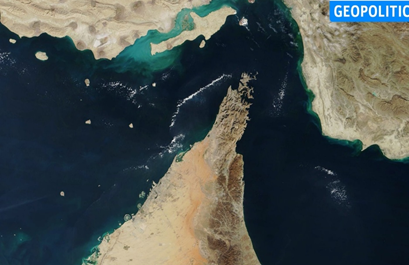
Now tensions in the Strait of Hormuz are creating
similar concerns. The whole area is on fire. More than 1,000 ships are stuck in
the strait.
Now the question is what needs to be done. Should
ships stay and wait, or continue sailing through the strait?
Some political leaders have suggested that ships should simply continue
sailing through the strait and “show some guts”. Such comments may sound strong in political
speeches, but they ignore the reality faced by the master and crew of a
merchant vessel. Decisions taken in
political offices eventually fall on the seafarers navigating those waters. For
them, the risk is very real.
Within the industry there can also be pressure to
keep trading through high-risk areas. Sometimes when a ship passes safely
through a dangerous region it is presented as a success story. But the outcome
is not the same for every vessel.
When an incident happens and a seafarer dies, one
has to ask a basic question. Does anyone investigate the instructions given to
the ship? On what basis were the master and crew told to sail through such
areas?
The vessel may be insured. The cargo may be
insured. But human life cannot be replaced.
When we bought our vessel, one thing was very clear
to us. We will never endanger the lives of our seafarers. No cargo and no charter
is worth that risk. If a situation becomes unsafe, our vessel will stay away
from conflict areas.
There is sometimes a sense of bravado in this
business — ships passing through dangerous waters and the story later presented
as a success. But when something goes wrong, it is the seafarers who pay the
price.
When incidents happen, one thing becomes clear. The risks of
geopolitical conflict are not carried by politicians or decision makers sitting
far away. They are carried by seafarers onboard the vessels.
In many of these crises, the practical solutions have come from the
shipping industry itself. Shipowners, managers, agents, and local maritime
communities organise repatriation, support families, and deal with emergencies.
International organisations issue statements and
hold discussions. This raises a
simple question.
The vast majority of world trade moves by sea. The global economy
depends on seafarers. Yet when crises happen — whether pandemics, wars, or
attacks on ships — the world still does not have a reliable system to protect
them.
Behind every crew list there is a family waiting at home.
When a seafarer boards a ship, the expectation is
simple: that the voyage will end safely and that he will return home. But when
merchant ships become targets in geopolitical conflicts, that expectation can
disappear very quickly.
Statements of concern will continue to be issued after every incident.
But for the families waiting at home, one thing is clear. When seafarers die,
statements are not enough.