




Office Address
123/A, Miranda City Likaoli Prikano, Dope
Phone Number
+0989 7876 9865 9
+(090) 8765 86543 85
Email Address
info@example.com
example.mail@hum.com


123/A, Miranda City Likaoli Prikano, Dope
+0989 7876 9865 9
+(090) 8765 86543 85
info@example.com
example.mail@hum.com
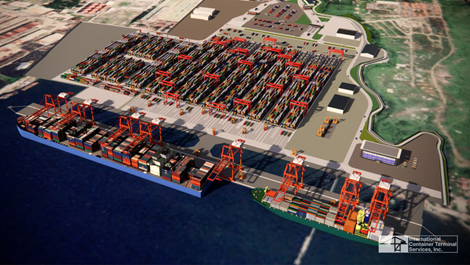
The $800
million facility is located around 110 kilometres south of Manila within the
Bauan International Port in Batangas.
Once completed, the terminal is
expected to expand container-handling capacity in Southern Luzon while
supporting the country’s broader trade and logistics network.
The
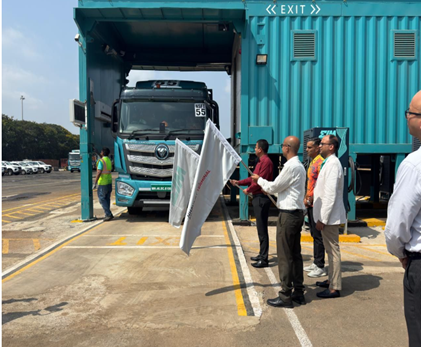
launch ceremony was led by Transportation Acting Secretary Giovanni Z.
Lopez and Bureau of Customs Commissioner Ariel F. Nepomuceno,
alongside several national and local officials.
Christian
R. Gonzalez, ICTSI Executive Vice President, led the company’s delegation and
acknowledged the support of government agencies and local authorities involved
in the project.
“It’s never easy to take the first
step. Having a vision is one thing, but making it happen on the ground requires
strong partnership with local leaders who are committed to delivering critical
infrastructure,” he said.
“We hope that what we unveil today
will inspire everyone and demonstrate what can be achieved through long-term
collaboration and commitment.”
SLCT is
situated within a naturally protected cove on Batangas Bay. The site is
expected to offer operational stability as the project progresses towards its
target completion in 2028 and prepares to handle ultra-large container vessels.
At full development, the terminal
will feature an 800-metre quay, 38 hectares of yard space, and an 18-metre
berth depth. Annual capacity is projected to exceed 2 million TEUs.
Phase 1
includes marine works and the construction of a 425-metre quay designed for
super post-Panamax operations.
Construction
is scheduled to take place between May and September 2027, with equipment
delivery and installation targeted for August 2027.
The
terminal is also planned as a smart technology facility, equipped with eight
remote-controlled ship-to-shore cranes, 20 rail-mounted gantries, and 32
diesel-hybrid carriers and handlers.
Road
access to the terminal will be provided through the Bauan–San
Pascual–Batangas–STAR route and major South Luzon tollways,
with additional connectivity under consideration through the Cavite-to-Bauan
corridor.
The project forms part of Philippine
President Ferdinand R. Marcos Jr.’s Build Better More infrastructure programme.