



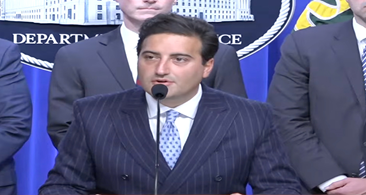
VIDEO: U.S. indicts Chinese container manufacturers on price fixing charges
At a press conference laced with expressions like
“Chinese cartel” and “Chinese bad actors,” the U.S. Department of Justice yesterday revealed that seven Chinese executives and four of the world’s
largest shipping container manufacturing companies have been indicted for
conspiring to restrict the output of — and fix the prices of — nearly all of
the world’s standard unrefrigerated shipping containers for over four years,
from as early as November 2019 to at least January 2024, in violation of
Section 1 of the Sherman Antitrust Act.
“Global price-fixing
cartels strike at the heart of our economic liberty. The defendants held
hostage the world’s supply of ocean shipping containers during the COVID
pandemic when our supply chains needed it the most. They stole from everyday
Americans who paid more and waited longer for vital goods as a result,” said
Acting Assistant Attorney General Omeed A. Assefi of the Justice Department’s
Antitrust Division. The multi-year
conspiracy roughly doubled the prices of standard shipping containers between
2019 and 2021, increasing the container manufacturers’ profits approximately
one hundredfold during the COVID-19 pandemic and global supply chain crisis.
One executive, Vick Nam Hing Ma, has been arrested and his extradition to the
United States is pending. Six executive co-defendants remain at large.
Defendant Vick Nam Hing Ma, also known as “Vick
Ma”, 54, a Chinese national, was employed by Singamas Container Holdings Ltd.
as marketing director. He was arrested on April 14, 2026, in France,
Following Ma’s arrest, the U.S. District Court for the Northern District of
California unsealed today a superseding indictment charging Ma and 10 of his
co-conspirators for conspiring to restrict the output of—and fix the price of —
nearly all the world’s standard unrefrigerated shipping containers (also known
as standard dry containers), the intermodal containers which carry billions of
dollars of goods across the oceans to American households each year. In total,
the superseding indictment charges 11 defendants, including 10 of Ma’s
co-conspirators:
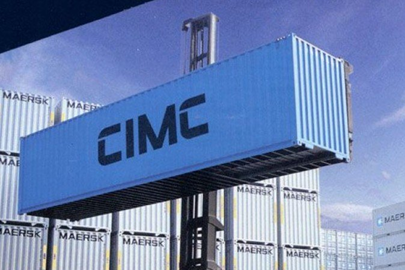
The companies named in the indictment are: Singamas
Container Holdings Ltd. (Singamas), a publicly traded company, organized and
existing under the laws of Hong Kong in the People’s Republic of China; China
International Marine Containers (Group) Co., Ltd. (CIMC), a publicly traded
company, organized and existing under the laws of the People’s Republic of
China; Shanghai Universal Logistics Equipment Co., Ltd., a company organized
and existing under the laws of the People’s Republic of China, doing business
as a brand of shipping containers called Dong Fang International Containers,
also known as “DF”, “DFIC”, or Dong Fang and CXIC Group Containers Co. Ltd.
(CXIC) a company organized and existing under the laws of the People’s Republic
of China.
The individuals named are: Siong Seng Teo, 71,
employed by Singamas as chief executive officer and chairman and believed to be
a resident of the Republic of Singapore. Boliang Mai, 67. From August 2015
through July 2020, Mai served as president and chief executive officer of CIMC.
From August 2020 through the rest of the period covered by the Superseding
Indictment, he served as chairman and CEO of CIMC. Mai is believed to be a
resident of the People’s Republic of China. Tianhua Huang, 62, was employed by
CIMC as vice president. Huang is believed to be a resident of the People’s
Republic of China. Yongbo Wan, 47, was employed by CIMC as general manager of
CIMC’s Operation Management Center. Wan is believed to be a resident of the
People’s Republic of China. Qianmin Li,
62, was employed by Dong Fang as general manager. Li is believed to be a
resident of the People’s Republic of China and
Yuqiang Zhang, 49, also known as \ “James Zhang,” was employed by CXIC
as CEO. Zhang is believed to be a resident of the People’s Republic of China.
As alleged in the superseding indictment — which also makes reference to two companies identified only as
“co-conspirator company A and co-conspirator B —as early as March 2019, several
of the conspirators began discussing a scheme to restrict the output and fix
the prices of standard dry shipping containers. On or about Nov. 14, 2019,
Yongbo Wan and Tianhua Huang of CIMC, Qianmin Li of Dong Fang, Yuqiang Zhang of
CXIC, and a co-conspiring executive of co-conspirator company A met at CIMC’s
headquarters in the city of Shenzhen. The goal of the agreement was to raise
the price of standard dry shipping containers. To do so, they agreed to
restrict CIMC’s, Dong Fang’s, CXIC’s, and co-conspirator company A’s output of
standard dry shipping containers by various means, including: Limiting the
number of shifts and hours that each production line for standard dry
containers could run per day; Installing 87 video surveillance cameras on all
49 dry container production lines to ensure that the companies did not exceed
the agreed-upon limitations; Not building any new container manufacturing
factories; and establishing a fund that included a mechanism to penalize
financially any cheating on the output-restriction agreement.
The participants contemplated that Singamas and
co-conspirator company B would join the output-restriction agreement later.
Those companies did so by at least as early as March 2020.
Throughout their conspiracy, the conspirators
refined the operation of the output-restriction agreement. By September 2020,
the conspirators agreed to restrict how many standard dry shipping containers
the company conspirators would manufacture for particular customers. These
customers included major U.S.-based container lessors, shipping lines, and
logistics companies, in addition to container lessors, shipping lines, and
logistics companies based in Europe, the People’s Republic of China, and
elsewhere. And, from at least as early as September 2022 until at least as late
as November 2023, the conspirators agreed to cap the total cargo volume of
containers that the company conspirators produced. On or about November 20,
2023, for example, Vick Ma of Singamas co-presented to his CEO, co-defendant
Siong Seng Teo, the conspiracy’s “total allowable capacity” and “allowable
quota” for production — organized by each company conspirator and its factory
lines.
As further alleged in
the indictment, the profits of CIMC’s container manufacturing business segment
increased nearly one hundredfold from about US$19.8 million in 2019, to about
US$288 million USD in 2020, to about US$1.75 billion in 2021. Singamas’s net
income weny from a loss of about US$110 million in 2019, to profits of about
US$4.6 million in 2020 and about US$186.8 million in 2021.
The superseding
indictment charges the defendants with a conspiracy in restraint of trade in
violation of Section 1 of the Sherman Antitrust Act (15 U.S.C. § 1). A
violation of the Sherman Act carries a maximum penalty of 10 years in prison
and a $1 million criminal fine for individuals, and a maximum penalty of a $100
million fine for corporations. The fines may be increased to twice the gain
derived from the crime or twice the loss suffered by the victims of the crime
if either amount is greater than the statutory maximum fine.
Related News