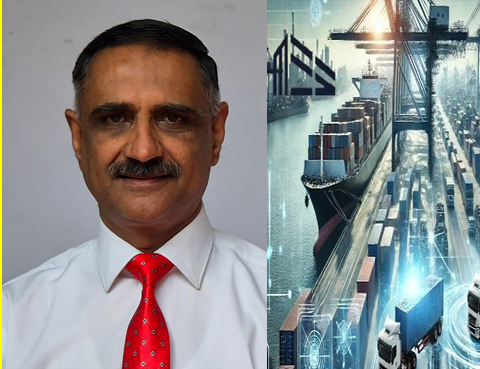
India's Logistics Sector Is Becoming an Information Economy : An article By Maj Gen Shamsher Singh Ahlawat, Advisor, NLDSL
The future of logistics will no longer be defined solely by trucks, ports and warehouses. Increasingly, the industry's greatest asset is becoming information accurate, connected and actionable data that enables faster, smarter and more efficient supply chains.
Introduction
Logistics has been predominantly considered as the actual transportation of goods over the last few decades. Investments were made mainly in transport infrastructure, storage capacity and the company’s distribution network. Although those elements are still essential for economic growth, a big change is happening in the industry. In modern days, the importance of information in logistics is growing. As supply chains become more complicated and interrelated, the ability to access, process and share reliable information becomes crucial in efficiency improvement.
Information Is the New Competitive Advantage
In the present scenario logistics result in the generation of massive data such as status of the shipment, level of inventory, customs clearance, multimodal transfers as well as the delivery date/time. But since it is not the quantity but the usability of the data that matters the most, data helps businesses when it aligns across the stakeholders allowing them to see better what they are doing, plan accordingly, eliminate risks and react to disturbances in a better manner. In fact, this marks a new era for the logistics industry, since information has become that strategic asset of the business instead of simply being a by-product of operationRelated News