


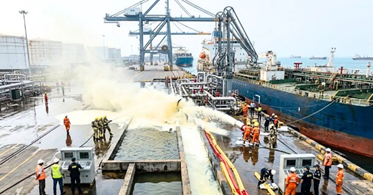
Fuel Pipeline Bursts during Vessel Unloading at India’s Paradip Port, Spilling Thousands of Litres of Petrol
The incident happened around 5 p.m. while petrol
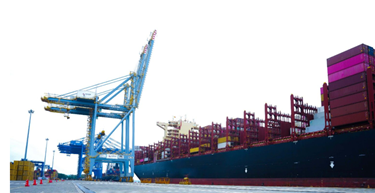
was being unloaded from a cargo ship berthed at the port’s oil jetty. Officials said the pipeline connecting the
port to the IOCL terminal reportedly burst due to pressure during the transfer
process, spilling thousands of litres of petrol. The leak prompted an emergency response at
the port, with CISF personnel, fire services and IOCL teams deployed in the
restricted area near Gate No. 1 to prevent any fire or explosion risk. Security arrangements around the affected
zone were also tightened.
Officials said CISF personnel patrolling the
prohibited area first noticed a strong smell of petrol and suspected a leak in
the pipeline passing through the area.
Authorities of IOCL were immediately informed,
following which a technical team reached the site and found the damaged section
of the pipeline.
Sources said some of the spilled petrol entered
nearby water bodies and the sea, causing panic among local residents and port
workers.
A senior Paradip Port
official said the pipeline burst occurred in an isolated area and no injuries
or casualties were reported. The leakage was later sealed by IOCL experts. “The petrol was being transported through a
pipeline from the oil jetty near Nehru bungalow to the oil terminal near
Bauripalanda village when the leakage was spotted,” IOCL official R.K. Sahoo
said. He said the IOCL maintenance team
present at the site immediately started work to stop the leakage. According to
him, the spilled fuel was recovered using a Mobile Oil Spill Recovery Unit
(MOSRU) before the area was cleaned.
Sahoo added that the jetty pipeline continued to be monitored throughout
Friday to check for any additional leaks, but no further leakage was
detected. Paradip Port Authority said unloading operations
would resume only after repair work and safety checks are completed. The
exact reason behind the pipeline damage has not yet been officially confirmed.
Officials said it remains unclear whether the rupture was caused by technical
failure, corrosion or another external factor.
Related News