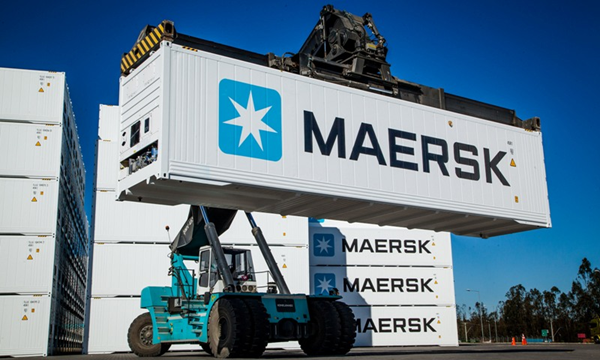
Maersk to Order 1,000 Containers from DCM Shriram, Boosting India’s Bid to Challenge China in Container Manufacturing
The announcement is
expected to be made on July 3 at Star Track Terminals’ Inland Container Depot
(ICD) in Dadri, Uttar Pradesh, during an event attended by Union Minister for
Ports, Shipping and Waterways Sarbananda Sonowal. The event will also witness the
unveiling and flagging off of two prototype containers manufactured by DCM
Shriram at its Faridabad facility according to Maersk’s specifications. The
order represents one of the most significant initiatives by a leading global
container carrier to support the development of India’s maritime manufacturing
ecosystem. It follows French shipping major CMA CGM’s decision earlier this
year to place an order for six container vessels at Cochin Shipyard, the first
such ships to be built in India. The
move comes ahead of the government’s planned rollout of a container
manufacturing incentive scheme announced in the Union Budget. The Centre has
earmarked ₹10,000 crore over five years to create a globally competitive
container manufacturing ecosystem, identifying container production as one of
seven strategic sectors targeted for expansion. India’s push into container manufacturing
gained urgency following severe container shortages during the pandemic, which
disrupted export-import trade and exposed the country’s dependence on Chinese
suppliers. China currently accounts for nearly 97 percent of global container
production.
Industry executives note that containers manufactured
in India are currently 30-40 percent more expensive than those produced in
China due to higher material costs and limited manufacturing scale. The
government is therefore working on a Production Linked Incentive (PLI) scheme
that could provide support of $400-500 per container for eligible greenfield
manufacturing projects.
According to
industry sources, Maersk’s container order is contingent on the finalisation of
the government’s policy framework, expected by August. The Ministry of Ports,
Shipping and Waterways has already circulated a draft proposal for Cabinet
approval. State governments are also
expected to play a key role. Gujarat, for instance, is developing a support
package that includes capital subsidies, affordable industrial land, and a
state-level top-up incentive linked to container production. Industry experts believe that achieving
manufacturing scale will be critical to narrowing the estimated $1,000 price
gap between Indian and Chinese-made containers. They argue that initial
investments and orders are necessary to build capabilities, improve
efficiencies, and gradually localise the supply chain.
Maersk reportedly conducted extensive audits of 12
Indian manufacturers with support from teams from Denmark and independent
auditors before selecting DCM Shriram. The focus was placed on quality,
manufacturing processes, and the ability to meet global standards. “Quality
was the first priority. Shipping lines cannot afford to compromise on safety
and reliability, particularly for equipment operating in harsh marine
conditions,” an industry executive familiar with the project said. The
initiative also aligns with the government’s broader strategy to strengthen
supply-chain resilience. During a meeting with Maersk Chairman Robert Uggla in
2025, Prime Minister Narendra Modi is understood to have encouraged the company
to explore container manufacturing in India to mitigate risks associated with
geopolitical tensions and concentrated supply chains. The upcoming order follows a memorandum
of understanding signed between Maersk and DCM Shriram during India Maritime
Week in October 2025. Since then, both companies have collaborated on technical
specifications, procurement planning, and manufacturing processes, with Maersk
facilitating exposure visits to overseas container production facilities. The successful execution of the initial
order is expected to pave the way for larger procurement commitments as India’s
container manufacturing ecosystem gains momentum and policy support takes
shape.
Related News