




Office Address
123/A, Miranda City Likaoli Prikano, Dope
Phone Number
+0989 7876 9865 9
+(090) 8765 86543 85
Email Address
info@example.com
example.mail@hum.com


123/A, Miranda City Likaoli Prikano, Dope
+0989 7876 9865 9
+(090) 8765 86543 85
info@example.com
example.mail@hum.com
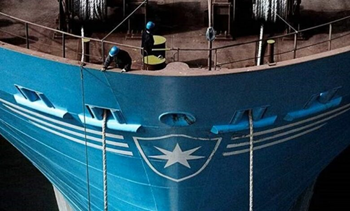
Only months ago, the Danish shipping giant warned investors it could
post an underlying EBIT loss of as much as $1.5bn this year. Now, after a
sustained surge in freight rates and stronger-than-expected cargo demand,
Maersk expects to deliver an underlying operating profit of between $2bn and
$4bn. Underlying EBITDA guidance has been lifted to $8bn-$10bn from a previous
range of $4.5bn-$7bn, while the company’s outlook for global container demand
has been raised to around 4% growth this year from an earlier forecast of 2% to
4%. The speed of the turnaround
underlines how quickly fortunes can change in container shipping. Far from sliding into the prolonged downturn
many expected as a record orderbook entered service, the market has instead
tightened once again as demand has outpaced effective fleet growth.
Industry data suggests Maersk is far from alone.
Linerlytica estimates global teu-mile demand is currently expanding by 7.3%,
comfortably ahead of fleet supply growth of 5.4%, producing the widest
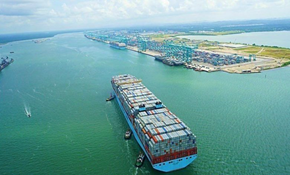
demand-supply gap since late 2024. Congestion has also returned with force,
with almost 11% of the world’s containership fleet currently waiting outside
ports, the highest level since 2022. These factors have pushed both freight and
charter markets sharply higher. Spot freight rates reflect the improvement.
The Shanghai Containerized Freight Index has climbed above 3,200 points, more
than double pre-conflict levels according to HSBC, while rates on both
Asia-Europe and transpacific trades continue to rise. Xeneta expects network
disruption linked to the Gulf crisis to persist into September even under an
optimistic scenario, suggesting freight rates could remain firm for several
more weeks. The market remains an
unusual combination of strength and caution. On paper, supply should be overwhelming
demand. The containership orderbook stands at roughly 12m teu, equivalent to
more than one-third of the existing fleet, with deliveries expected to peak
next year. Under normal circumstances, that volume of new tonnage would place
severe downward pressure on freight markets.
Instead, effective capacity continues to be
absorbed by longer voyage distances, congestion, tactical capacity management
and periodic geopolitical disruption. The Red Sea crisis continues to reshape
global networks, while recent tensions around the Strait of Hormuz have added
fresh uncertainty to vessel deployment and scheduling. Even so, few analysts believe today’s
buoyant conditions will last indefinitely.
The consensus remains that the
current strength represents another disruption-driven phase rather than the
start of a new supercycle. As more newbuildings enter service over the next two
years and geopolitical bottlenecks gradually ease, freight markets are expected
to normalise. For now, however, Maersk’s guidance upgrade sends a clear
message. Predictions earlier this year that 2026 would be dominated by
oversupply have given way to a very different reality.
Once again, container shipping
has demonstrated its remarkable ability to defy conventional market logic,
turning what looked like a year of losses into another period of substantial
profitability.