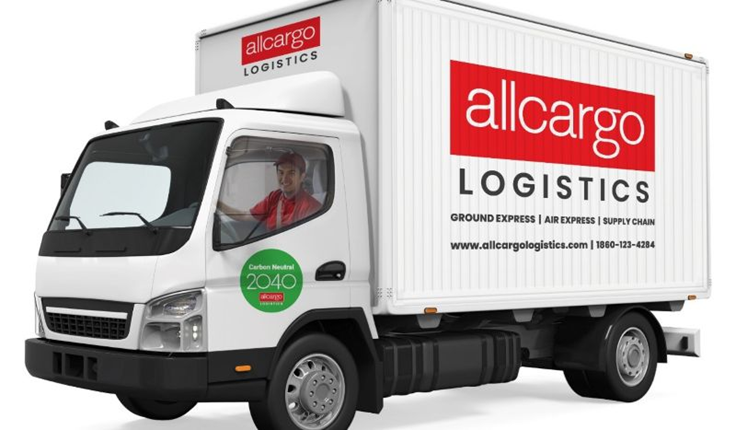
Allcargo Logistics Strengthens Textile MSME Supply Chains across Mau and Surat
The company is
focusing on connecting textile production clusters with consumption markets
across the country, enabling businesses to improve supply chain efficiency,
expand their market reach, enhance delivery reliability and respond more
effectively to changing customer demand.
Mau and Surat represent two distinct yet important segments of India’s
textile economy. Mau is widely recognised for its traditional weaving and
saree-making heritage, while Surat has developed into a major hub for textile
manufacturing, processing and distribution. As businesses in both clusters
increasingly look beyond their traditional regional markets, efficient
transportation, wider distribution networks and technology-enabled shipment
visibility are becoming critical to their growth. Commenting on the development, Ketan
Kulkarni, Managing Director & CEO, Allcargo Logistics, said: “India’s
textile clusters reflect the diversity of the country’s MSME ecosystem, from
traditional weaving and saree-making communities to large-scale manufacturing
hubs. As per IBEF, 100% FDI permitted in the Indian textile sector, the
industry is well positioned for further expansion. As these businesses expand
beyond their traditional markets, logistics needs to evolve alongside them. Our
approach is centered on understanding these evolving requirements and
translating them into better service quality, reach, reliability and
visibility. Through our integrated capabilities, we aim to help textile
businesses strengthen customer relationships, access new markets and build
supply chains that are agile enough to support sustained growth.” For textile MSMEs, logistics is increasingly emerging as a growth
enabler, allowing businesses to serve geographically dispersed customers with
greater reliability and efficiency. Allcargo Logistics said its Allcargo
Extended Reach (AER) network provides coverage across 100% of India’s
serviceable PIN codes. The number of mapped PIN codes has increased from around
21,000 to more than 32,000, while direct serviceable PIN codes have grown from
4,900 to over 10,000 through the company’s Allcargo Distribution Centres. The
company has also expanded its transshipment centres from 21 to 71, further strengthening
its ability to connect production centres with markets across the country. The expanded network is expected to
support textile businesses in Mau and Surat in reaching customers across metros
as well as Tier II, Tier III and Tier IV cities. For
traditional saree and textile businesses in Mau, dependable distribution
infrastructure can provide access to markets beyond the region’s immediate
geography. Meanwhile, Surat’s large-scale textile ecosystem can benefit from
increased network density, improved shipment visibility and efficient movement
of high-volume consignments to diverse destinations. As India’s textile industry becomes
increasingly integrated across geographies, logistics is expected to play a
greater role in helping MSMEs transition from cluster-focused operations to
broader national and global markets.
Stronger distribution networks,
technology-enabled visibility and responsive logistics solutions can help
textile enterprises improve customer service, enter new markets and manage
increasingly complex supply chains.
For textile clusters such as Mau and Surat, the ability to combine
manufacturing strength with efficient logistics connectivity could become an
important competitive advantage as India’s textile sector continues to expand.
Related News