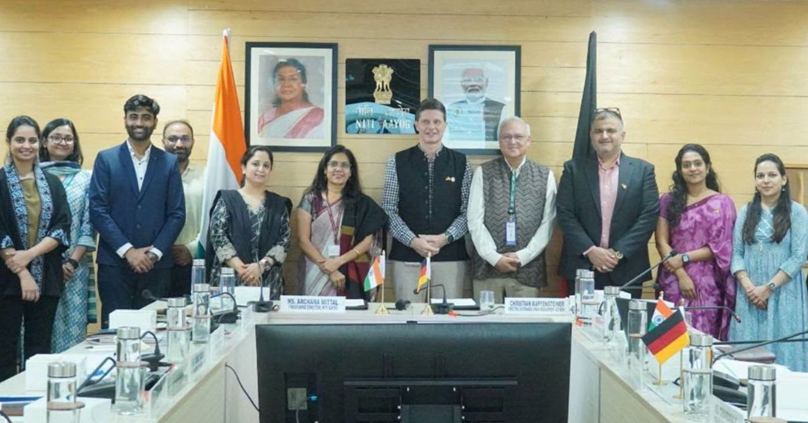
NITI Aayog and GIZ sign agreement to accelerate electric truck adoption in India
The agreement formalises
India’s participation in the second phase of the Nationally Determined
Contribution–Transport Initiative for Asia (NDC-TIA II). Backed by the German
government’s International Climate Initiative, the programme aims to help
countries meet their national climate commitments by reducing emissions from
freight transport. The regional
programme covers India, China and Vietnam, where road transport accounts for a
substantial share of freight activity. It brings government agencies,
businesses and civil society organisations together to develop policies for
electric commercial vehicles and the charging networks they require. GIZ
provides technical advice and supports implementation across the three
countries. The German government lists €4.04 million in funding for the
regional programme, which runs from November 2024 to September 2028. NITI Aayog is India’s government partner.
Its announcement also names World Resources Institute India, the International
Council on Clean Transportation India and Agora Energiewende among the
implementing partners. NITI Aayog said electrification remains at an early
stage among operators of medium- and heavy-duty freight vehicles. Earlier Indian research identifies where
electric trucks could enter service first. In May 2025, the Office of the
Principal Scientific Adviser identified ten priority corridors for
zero-emission trucking. They include Kolkata–Haldia, Vijayawada–Visakhapatnam,
Coimbatore–Kochi and Bengaluru–Chennai. The 164-kilometre Chennai–Villupuram
corridor ranked first. Five of the
ten routes are in southern India. Interviews with drivers and fleet operators
identified regular return trips on those corridors, alongside substantial truck
traffic and industrial activity. The shortlisted routes range from 120 to 350
kilometres, distances the study found compatible with truck models available in
India at the time. For port and
hinterland operators, the study sets out a practical next step. It calls for a
pilot proposal and a business plan for each corridor, assessing the cash flows
of both the trucks and the charging infrastructure. That would allow fleet
owners and charging providers to evaluate the same route against expected
traffic and operating costs. India
has a separate purchase incentive under the PM Electric Drive Revolution in
Innovative Vehicle Enhancement (PM E-DRIVE) scheme. The Ministry of Heavy
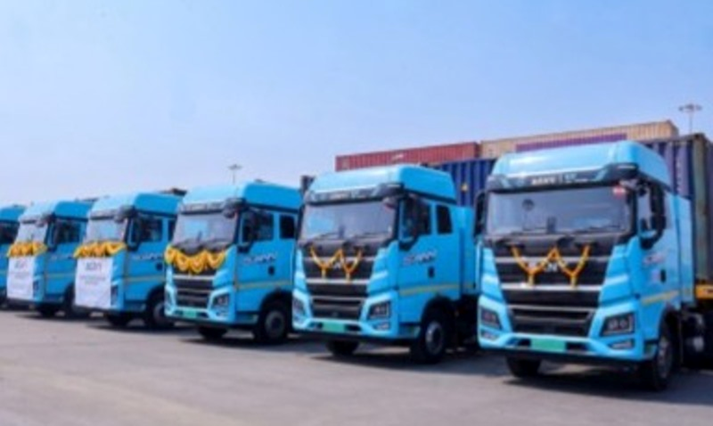
Industries allocated ₹500 crore to support the purchase of 5,643 electric
trucks. It identified ports, logistics, cement and steel among the sectors
expected to benefit.
The incentive varies with the
truck’s gross vehicle weight and is capped at ₹9.6 lakh per vehicle. Eligible
buyers receive an upfront reduction in the purchase price, and the government
reimburses manufacturers through the scheme portal. Buyers must also submit a
scrapping certificate for an old truck from an approved facility. The NITI
Aayog–GIZ agreement addresses the wider conditions for putting those vehicles
to work, including finance and access to charging on freight routes.

Related News