India secures first railway propulsion system order from Japan, expanding technology exports
Japan has placed its first order for electronic train propulsion systems manufactured in India, opening a new export opportunity for the country’s railway engineering industry. The development is significant given Japan’s established railway technology sector and its experience in high-speed rail operations. Propulsion systems account for nearly 40% of a train’s total value, making the order an important addition to India’s railway technology exports. The deal could also create opportunities for domestic manufacturers and suppliers across the railway component ecosystem as India seeks to expand its presence in international markets.
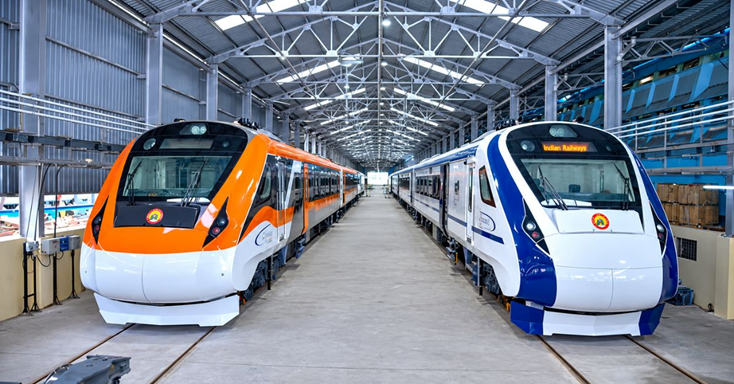
India has already supplied railway components to markets including Germany, France, Switzerland and the United States. Manufacturing facilities in the country, including Alstom’s plant in Maneja, Vadodara, have collectively exported more than 5,000 units to countries such as Germany, Switzerland, France, Italy, Spain, Romania and Mexico. India has also exported railway coaches to Australia and Canada, while its locomotives have been supplied to Mozambique, Senegal and Sri Lanka. The latest order from Japan adds another market to India’s railway export portfolio and reflects the growing role of domestic manufacturing facilities in supplying railway technology to international customers. Railway Minister Ashwini Vaishnaw has set a target for India to begin exporting complete, Made-in-India Vande Bharat trains by 2029–30. The target signals a shift in the country’s export ambitions, from supplying individual components and equipment to manufacturing and exporting complete trainsets.
The Vande Bharat platform has become a key part of India’s railway modernisation programme and domestic train manufacturing efforts. Its development has also contributed to the country’s capabilities in designing and producing advanced passenger trains. Alongside its export plans, India is developing an indigenous high-speed train for the 508-km Mumbai–Ahmedabad High-Speed Rail Corridor. Indian Railways is working on the trainsets in partnership with BEML (Bharat Earth Movers Limited) and Integral Coach Factory (ICF), Chennai. Trials are planned for mid-2027.
The project includes
the B28 trainset, also known as the Vande Bullet, which is designed to achieve
test speeds of up to 280 kmph and an operational speed of approximately 250
kmph. A higher-speed version designed
to reach 320 kmph is also planned.
The development of indigenous
high-speed trainsets, combined with overseas orders for railway systems, forms
part of India’s broader effort to expand domestic railway engineering and
manufacturing capabilities.
Related News