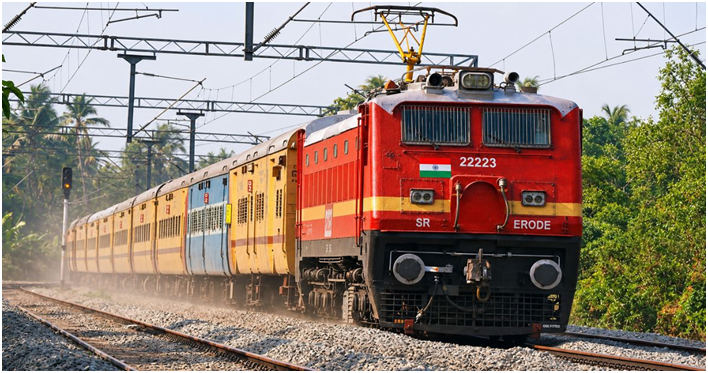
Railways spends ₹2.15 lakh crore in first half of FY27, outpaces highways in budget utilisation/
Highways capital expenditure
stood at approximately ₹1.78 lakh crore against an annual budget estimate of
₹3.09 lakh crore. Railways therefore led both in expenditure and the proportion
of its allocation utilised during the first half of financial year 2026–27. Railways’ utilisation increased from 69% in
the corresponding period of FY2025–26 to around 77%, an improvement of
approximately eight percentage points.
Across the Union government, capital expenditure rose to about ₹6.5 lakh
crore from ₹5.8 lakh crore a year earlier. Reported utilisation of the annual
capital expenditure budget increased to 53.1%, compared with 51.8%. The railway and highways ministries
together spent roughly ₹3.93 lakh crore, accounting for about three-fifths of
the reported central capital expenditure total. The figures underline the
importance of transport infrastructure in the government’s investment
programme. The half-year utilisation
comparison should be distinguished from Indian Railways’ broader annual capital
expenditure programme. The government’s Budget announcement placed total
planned railway capital expenditure for FY2026–27 at ₹2,93,030 crore. The programme covers freight
infrastructure, passenger connectivity, capacity expansion and safety. Nearly
₹1.20 lakh crore was earmarked for safety-related works, including track and
rolling-stock maintenance, overhead electrical systems and deployment of the
Kavach automatic train protection system.
Consequently, the spending total encompasses several categories of investment.
It should not be read as expenditure exclusively on freight corridors or port
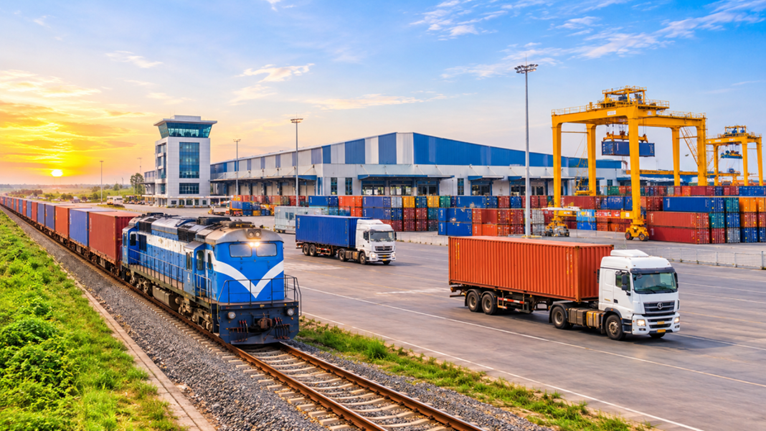
connectivity. A major freight proposal
in the Union Budget is the 2,052-km Dedicated Freight Corridor connecting
Dankuni in West Bengal with Surat in Gujarat. The announced route passes
through Odisha, Chhattisgarh, Madhya Pradesh and Maharashtra. The corridor is intended to connect with
the Western Dedicated Freight Corridor, creating an additional route for goods
moving towards west-coast ports. The government has positioned it as a means of
relieving congestion and strengthening east–west industrial connectivity. This remains a proposed infrastructure
development. Its inclusion in the investment agenda does not establish how much
of the reported first-half expenditure was spent on the corridor. Capacity expansion also includes projects
on existing railway routes. On 9 September 2026, the Cabinet approved three
multitracking projects with an estimated combined cost of ₹10,783 crore. These cover a fourth line between
Kharagpur and Jharsuguda’sBagdehi section, a fourth line between Katni and
Pendra Road, and a third line between Bilaspur’sUslapur section and Pendra
Road. Together, they cover
approximately 656 km across five states and are planned for completion by
FY2029–30. The government estimates that the additional capacity could support
27 million tonnes of annual freight traffic, particularly coal, cement, iron
and steel. The projects illustrate
the practical purpose of railway capacity investment: easing congested sections
and improving service reliability for industrial cargo. Their expected benefits
will depend on completion and commissioning, rather than budget utilisation
alone.
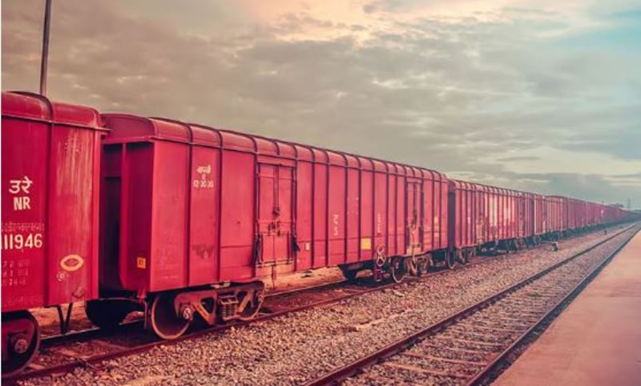
For freight customers and port-linked supply
chains, the distinction between expenditure and operational capacity remains
important. The half-year figures indicate the pace of investment, while
completed tracks, functioning terminals and reliable train services will
determine the resulting logistics improvements.

Related News