Gateway Distriparks wins eight-year mandate to manage JNPA’s common rail yard/
Announced on 18 November 2026,
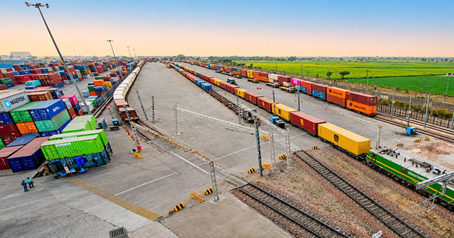
the contract covers a Dedicated Freight Corridor (DFC)-compatible facility that
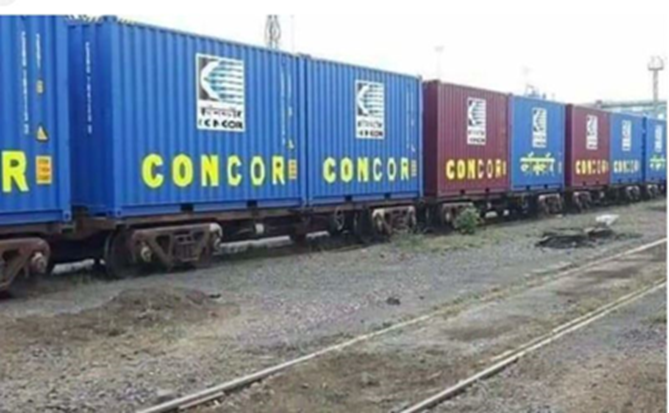
handles mixed container trains carrying cargo for different terminals within
the port. The assignment places Gateway at an important interchange between
hinterland rail services and marine container terminals. Gateway will undertake train handling and
placement, segregation of mixed container trains, container handling and
stacking, inter-terminal transfers and associated yard activities. The common yard is one of only two among
JNPA’s five rail terminals equipped with 1,500-metre DFC-compatible lines.
These tracks are designed to accommodate long-haul container trains carrying
import and export cargo.
PremKishanDass Gupta, Chairman and Managing Director of Gateway Distriparks,
said the company would work with JNPA and terminal operators to improve
coordination and provide dependable rail services. The company expects the arrangement to
support smoother train handling and better utilisation of existing port rail
infrastructure. These are intended operational improvements, rather than
reported performance gains following the award. JNPA developed the integrated common rail
yard to handle DFC trains serving multiple container terminals. The port’s
infrastructure account records the commissioning of two 1.5-kilometre lines
capable of accommodating double-stack and long-haul trains. The shared facility provides a location
for handling rail cargo distributed across different terminals, complementing
the separate long-train infrastructure at Bharat Mumbai Container
Terminals. Its role is particularly
relevant to mixed trains, where containers arriving together need to be
directed towards different terminal destinations. The yard therefore forms part
of the connection between trunk rail transport and the individual terminals
handling seaborne cargo. JNPA’s rail
network connects with Indian Railways through Jasai, on the Panvel–Uran branch
of Central Railway. The port also identifies an intermediate holding yard between
Jasai and JNPA as infrastructure used to regulate train movements when
congestion occurs at either location. This wider network provides the operating
context for the common-yard assignment.
Gateway’s investor presentation dated 28 October 2026 listed 35
operating rakes, with two additional rakes purchased for delivery during the
third quarter of financial year 2026–27.
Its network included six rail-linked inland container depots (ICDs) and
four container freight stations (CFSs). Regular rail services connected its
inland operations with NhavaSheva, Mundra, Pipavav and Kandla. The company’s rail-linked locations
include GarhiHarsaru, Piyala, Sahnewal, Kashipur, Viramgam and Ankleshwar. Its
CFS operations are located at NhavaSheva, Chennai, Visakhapatnam and
Kochi. Together, these assets support
a business spanning container trains, terminals, warehousing and road
transport. Gateway reported more than 500 trailers and approximately 172,000
square metres of warehousing in the same presentation. Gateway’s October presentation identified
further investment in rail and inland terminal capacity. Alongside the planned
increase to 37 rakes, it listed an ICD under construction at Indore, with
approximately 120,000 twenty-foot equivalent units of annual capacity and an
estimated investment of ₹150 crore.
The company targeted the
fourth quarter of financial year 2027–28 for the Indore facility. It also
identified capacity extensions at GarhiHarsaru and Piyala as utilisation
increases. These projects concern
Gateway’s wider network development and are separate from the eight-year
operating mandate at JNPA’s existing common rail yard.

Related News