Samsung Heavy Industries weighs India expansion as Swan partnership targets vessel projects
The company’s Geoje shipyard
is reportedly booked for the next three years, with an executive putting its
annual production capacity at approximately 60 vessels. India is among the
locations being evaluated for expanding production. However, SHI has not
announced a confirmed investment, selected site or construction timetable for a
new Indian facility. SHI’s existing
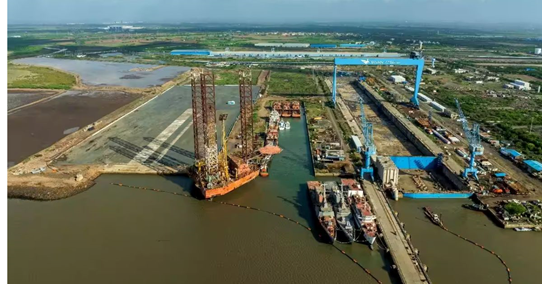
Indian collaboration is with Swan Defence and Heavy Industries (SDHI), which
operates the Pipavav shipyard in Gujarat.
According to SDHI, the companies have jointly submitted an expression of
interest for a Shipping Corporation of India (SCI) programme covering eight
very large gas carriers (VLGCs), each with a cargo capacity of 88,000 cubic
metres. They are also pursuing a
joint bid for four dual-fuel-ready medium-range product tankers. These activities
remain at the proposal and bidding stages, with the update providing no
confirmation of contract awards. The
vessel programmes give the partnership specific commercial opportunities to
pursue alongside SHI’s broader assessment of manufacturing options in
India. The companies announced their
strategic memorandum of understanding (MoU) in September 2025. It provides for
joint exploration of commercial shipbuilding and heavy engineering projects in
Indian and international markets. The
agreement covers tankers, gas carriers, container ships and other specialised
vessels. Its technical scope includes next-generation vessel designs, green
technologies and digital shipbuilding methods. The partners also identified
production-design improvements and local sourcing of materials as areas for
reducing costs and improving project execution. The arrangement therefore
extends beyond individual vessel bids to the engineering and procurement
processes needed to support construction.
SHI’s own announcement placed the Indian partnership within its wider
international expansion strategy, following cooperation arrangements in China
and the United States. It highlighted Swan’s ability to accommodate very large
crude carriers and offshore structures.
SDHI’s shipyard has a dry dock
measuring 662 metres by 65 metres, with a stated capacity of 400,000 deadweight
tonnes. Its annual steel fabrication capacity is 144,000 tonnes. The facility also includes a dedicated
offshore yard measuring 750 metres by 265 metres for fabrication, erection and
load-out of platforms, offshore structures and heavy engineering modules
weighing up to 10,000 tonnes. These
facilities form the existing industrial base for the collaboration, separate
from any potential SHI investment in a new shipbuilding cluster elsewhere in
India. SHI participated in the India
Shipbuilding Investment Conclave in New Delhi on 16 November 2026, where Union
Minister of Ports, Shipping and Waterways Sarbananda Sonowal presented
opportunities across five proposed coastal clusters. The locations comprise Dugarajapatnam in
Andhra Pradesh, Kuchhadi in Gujarat, Dighi in Maharashtra, Kendrapara in Odisha
and Thoothukudi in Tamil Nadu. The government projected an investment
opportunity of nearly $10 billion across these developments. Executives from 30 international shipyards
attended the conclave, alongside shipping companies, equipment suppliers and
financiers. The ministry said site visits had been arranged for 10
international delegations.
The initiative supports
India’s targets of entering the world’s top 10 shipbuilding nations by 2030 and
the top five by 2047. For SHI, the immediate distinction remains between its
established cooperation with Swan and an exploratory assessment of additional
manufacturing investment.
Related News