The conclave, scheduled for
November 16–17, is designed to provide a dedicated platform for strategic
investment discussions, technology partnerships, industrial collaborations and
the development of world-class greenfield shipbuilding clusters. It aims to
connect international shipbuilding expertise with India’s growing manufacturing
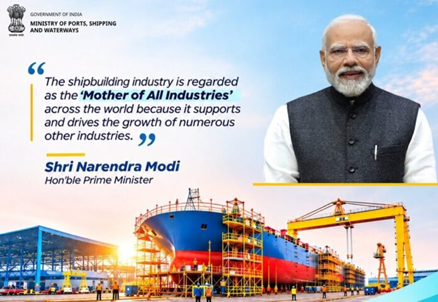
capabilities and emerging investment opportunities. The initiative aligns with the vision of Prime Minister Shri Narendra Modi to
position India among the world’s leading shipbuilding nations, with an ambition
to become one of the Top Five global shipbuilding countries by 2047. The
Government is working towards expanding domestic shipbuilding capacity,
attracting global investments, strengthening maritime manufacturing and developing
a robust network of supporting industries.
A major pillar of India’s shipbuilding transformation is the
Government’s comprehensive shipbuilding support package of approximately
₹69,725 crore, aimed at expanding domestic shipbuilding capacity, improving
financial competitiveness and encouraging investment in new shipyard
infrastructure. The package includes
the Shipbuilding Financial Assistance
Scheme (SBFAS), with an outlay of ₹24,736 crore, the ₹25,000 crore Maritime Development Fund (MDF), and
the ₹19,989 crore Shipbuilding Development Scheme (SBDS). These initiatives are
designed to provide financial assistance, long-term investment support,
infrastructure development and capacity expansion across the domestic
shipbuilding industry. The
Shipbuilding Development Scheme places particular emphasis on establishing
greenfield shipbuilding clusters and expanding existing shipyard facilities,
creating an integrated industrial ecosystem supported by common infrastructure
and modern manufacturing capabilities.
A key focus of the conclave will be the development of five proposed
greenfield shipbuilding clusters across Gujarat, Andhra Pradesh, Tamil Nadu,
Maharashtra and Odisha. The proposed locations include Kuchchadi in Gujarat,
Dugarajapatnam in Andhra Pradesh, Thoothukudi in Tamil Nadu, Dighi in
Maharashtra and Kendrapara in Odisha.
These clusters are envisioned as integrated shipbuilding and maritime
manufacturing destinations, offering opportunities for global shipbuilders,
marine equipment manufacturers, engineering companies and technology providers
to establish or expand their operations in India. The development of these clusters is
expected to encourage investments in ship construction, ship repair, marine
engines, propulsion systems, specialised equipment, engineering, research and
development, and other supporting maritime industries. The conclave will feature focused
investment dialogues and discussions on India’s shipbuilding opportunities,
policy framework, financing mechanisms and investment incentives. Global
industry leaders will have opportunities to interact with Indian shipyards,
maritime public sector undertakings, port authorities, state governments and
cluster development agencies.
Dedicated discussions will also explore collaboration in marine engines,
equipment manufacturing, engineering, advanced ship technologies, supply-chain
development and skill enhancement. Business-to-business meetings and direct
interactions with representatives of the proposed shipbuilding clusters will
help prospective investors evaluate project opportunities and identify
potential partnerships. The second
day of the conclave, November 17, will include visits to proposed greenfield
shipbuilding cluster locations, enabling participating investors and industry
representatives to assess infrastructure, logistics connectivity and investment
potential. Beyond attracting
investments in shipyard infrastructure, India’s shipbuilding ambitions extend
to developing a comprehensive domestic maritime manufacturing ecosystem.
Greater participation from international shipbuilders and technology companies
is expected to facilitate technology transfer, strengthen domestic supply
chains, improve manufacturing capabilities and create new opportunities for
skilled employment. The initiative
also supports the broader objectives of Maritime
India Vision 2030 and Maritime
AmritKaal Vision 2047, which envisage a stronger, self-reliant and globally integrated Indian
maritime sector.
With focused policy support,
dedicated financing mechanisms, greenfield infrastructure development and
international industry partnerships, the India Shipbuilding Investment Conclave
2026 marks an important step towards translating India’s shipbuilding ambitions
into concrete investment opportunities and long-term industrial growth. The conclave is expected to strengthen
India’s position in the global maritime value chain while laying the
foundation for a new phase of growth in domestic shipbuilding, ship repair and
marine equipment manufacturing.The conclave, scheduled for
November 16–17, is designed to provide a dedicated platform for strategic
investment discussions, technology partnerships, industrial collaborations and
the development of world-class greenfield shipbuilding clusters. It aims to
connect international shipbuilding expertise with India’s growing manufacturing
capabilities and emerging investment opportunities. The initiative aligns with the vision of Prime Minister Shri Narendra Modi to
position India among the world’s leading shipbuilding nations, with an ambition
to become one of the Top Five global shipbuilding countries by 2047. The
Government is working towards expanding domestic shipbuilding capacity,
attracting global investments, strengthening maritime manufacturing and developing
a robust network of supporting industries.
A major pillar of India’s shipbuilding transformation is the
Government’s comprehensive shipbuilding support package of approximately
₹69,725 crore, aimed at expanding domestic shipbuilding capacity, improving
financial competitiveness and encouraging investment in new shipyard
infrastructure. The package includes
the Shipbuilding Financial Assistance
Scheme (SBFAS), with an outlay of ₹24,736 crore, the ₹25,000 crore Maritime Development Fund (MDF), and
the ₹19,989 crore Shipbuilding Development Scheme (SBDS). These initiatives are
designed to provide financial assistance, long-term investment support,
infrastructure development and capacity expansion across the domestic
shipbuilding industry. The
Shipbuilding Development Scheme places particular emphasis on establishing
greenfield shipbuilding clusters and expanding existing shipyard facilities,
creating an integrated industrial ecosystem supported by common infrastructure
and modern manufacturing capabilities.
A key focus of the conclave will be the development of five proposed
greenfield shipbuilding clusters across Gujarat, Andhra Pradesh, Tamil Nadu,
Maharashtra and Odisha. The proposed locations include Kuchchadi in Gujarat,
Dugarajapatnam in Andhra Pradesh, Thoothukudi in Tamil Nadu, Dighi in
Maharashtra and Kendrapara in Odisha.
These clusters are envisioned as integrated shipbuilding and maritime
manufacturing destinations, offering opportunities for global shipbuilders,
marine equipment manufacturers, engineering companies and technology providers
to establish or expand their operations in India. The development of these clusters is
expected to encourage investments in ship construction, ship repair, marine
engines, propulsion systems, specialised equipment, engineering, research and
development, and other supporting maritime industries. The conclave will feature focused
investment dialogues and discussions on India’s shipbuilding opportunities,
policy framework, financing mechanisms and investment incentives. Global
industry leaders will have opportunities to interact with Indian shipyards,
maritime public sector undertakings, port authorities, state governments and
cluster development agencies.
Dedicated discussions will also explore collaboration in marine engines,
equipment manufacturing, engineering, advanced ship technologies, supply-chain
development and skill enhancement. Business-to-business meetings and direct
interactions with representatives of the proposed shipbuilding clusters will
help prospective investors evaluate project opportunities and identify
potential partnerships. The second
day of the conclave, November 17, will include visits to proposed greenfield
shipbuilding cluster locations, enabling participating investors and industry
representatives to assess infrastructure, logistics connectivity and investment
potential. Beyond attracting
investments in shipyard infrastructure, India’s shipbuilding ambitions extend
to developing a comprehensive domestic maritime manufacturing ecosystem.
Greater participation from international shipbuilders and technology companies
is expected to facilitate technology transfer, strengthen domestic supply
chains, improve manufacturing capabilities and create new opportunities for
skilled employment. The initiative
also supports the broader objectives of Maritime
India Vision 2030 and Maritime
AmritKaal Vision 2047, which envisage a stronger, self-reliant and globally integrated Indian
maritime sector.
With focused policy support,
dedicated financing mechanisms, greenfield infrastructure development and
international industry partnerships, the India Shipbuilding Investment Conclave
2026 marks an important step towards translating India’s shipbuilding ambitions
into concrete investment opportunities and long-term industrial growth. The conclave is expected to strengthen
India’s position in the global maritime value chain while laying the
foundation for a new phase of growth in domestic shipbuilding, ship repair and
marine equipment manufacturing.