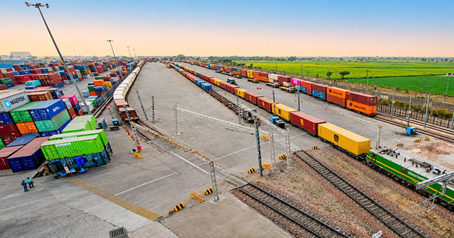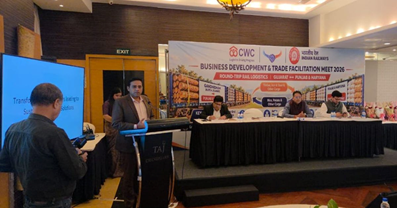
Railways and CWC seek two-way freight links between Gujarat and northern India.
The Ahmedabad, Ambala and Firozpur railway divisions
jointly organised a trade meeting with CWC in Chandigarh on 20 November 2026.
Farmers, rice millers, traders, manufacturers, exporters and logistics
providers participated in discussions on cargo demand and transport
requirements. The initiative seeks to
develop commercially viable two-way movements between northern India’s
production centers and Gujarat’s industrial and port network, including
Gandhidham, Kandla and Mundra. It remains a trade-development exercise, with no
new scheduled train service announced in the available account. Ahmedabad Divisional Railway Manager Ved
Prakash proposed pairing rice, potatoes and other agricultural produce moving
from Punjab and Haryana towards Gujarat with return loads of timber, salt,
fertilisers, industrial products and imported commodities. Historical figures presented at the
meeting showed that approximately 33.4 lakh tonnes of iron and steel and 2.2
lakh tonnes of timber and wood products moved from Gandhidham towards Punjab
and Haryana between April 2022 and March 2024. Rice movements from Punjab and Haryana
towards Kutch totalled around 60.3 lakh tonnes, including 38.7 lakh tonnes
originating from Karnal. Seasonal potato traffic from the two northern states
towards Mehsana was estimated to offer potential of 70,000 tonnes. These
figures describe past movements and assessed opportunities, rather than new
bookings. The discussions focused on
connecting railway transport with storage, cargo aggregation, handling and
first- and last-mile delivery.
Businesses were encouraged to identify requirements extending beyond
station-to-station movement, including collection from farms, factories, rice
mills and warehouses, followed by delivery to buyers, ports or final
markets. Participants also discussed
packaging, freight terminals and financing. Bringing these functions together
is intended to make rail freight accessible to businesses whose shipments
require coordination across several stages of the supply chain. CWC’s regional offices in Chandigarh,
Panchkula, Ahmedabad and Jaipur participated in organising the event alongside
the railway divisions. In its account
of the meeting, CWC highlighted services including scientific storage, pest
control, fumigation, handling and warehouse receipt-based financing. The
corporation positioned these capabilities as part of its expansion beyond
conventional warehousing into integrated logistics. The objective is to convert identified
cargo potential into regular rail traffic, reduce empty running and develop
continuing commercial relationships between cargo owners and service providers.
The meeting also brought rice and timber businesses together with agricultural
firms and industrial customers to examine complementary freight demand. The effort reflects the wider emphasis on
locating freight-handling facilities closer to production and consumption
centres. Under the Gati Shakti
Multi-Modal Cargo Terminal policy, terminal locations are selected according to
industrial demand, cargo potential, railway infrastructure and the surrounding
logistics market. The Ministry of Railways has said the policy supports
facilities such as warehouses, silos, cold storage and other logistics services
alongside rail connectivity. Such
facilities are intended to improve loading and unloading, wagon turnaround and
access for industrial and agricultural customers. They provide the
infrastructure context for trade-led initiatives such as the
Gujarat–Punjab–Haryana discussions.
For the proposed freight
links, the next commercial task is to translate commodity demand and seasonal
requirements into workable transport arrangements. Participants’ discussions on
cargo-specific solutions, handling and delivery requirements will be important
to establishing regular services.
Related News