



Amazon Unveils AI-Powered Robots and Humanoids to Revolutionize Logistics
According to Reuters,
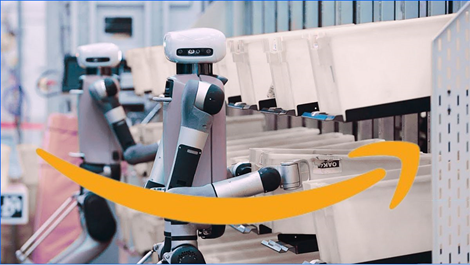
Amazon’s Lab126 is developing multi-tasking warehouse robots powered by agentic
AI, a system that enables machines to make decisions and handle multiple tasks
without human input. These robots will be capable of unloading trailers, retrieving parts,
and responding to natural language commands, offering more flexibility than
current single-function bots.
“We’re creating systems
that can hear, understand, and act on voice commands,” an Amazon spokesperson
told Reuters. The company also noted that these technologies will help reduce water
usage and carbon emissions, aligning with its sustainability goals.
As reported by The Information, Amazon is developing
software for humanoid robots aimed at performing delivery tasks. A “humanoid
park”, an indoor obstacle course at its San Francisco office is near completion
and will soon be used to test these robots in real-world-like environments.
Though in early stages, the project signals Amazon’s interest in reshaping
last-mile delivery with autonomous systems.
Amazon is also using generative
AI to create precise delivery maps, helping drivers navigate complex locations
such as apartment buildings and office parks. These maps detail building
layouts, obstacles, and ideal drop-off points to improve delivery speed and
accuracy. To further assist drivers, Amazon is testing smart glasses with
built-in displays that provide hands-free, real-time navigation.
In parallel, Amazon is enhancing predictive inventory planning using AI
to analyze weather, pricing trends, and sales events, ensuring high-demand
products are stocked efficiently across fulfillment centers. Together, these
advancements reflect Amazon’s strategy to automate and optimize its logistics
operations, laying the groundwork for a more intelligent, efficient, and
potentially autonomous future in e-commerce and delivery.

Related News