

Office Address
123/A, Miranda City Likaoli Prikano, Dope
Phone Number
+0989 7876 9865 9
+(090) 8765 86543 85
Email Address
info@example.com
example.mail@hum.com


123/A, Miranda City Likaoli Prikano, Dope
+0989 7876 9865 9
+(090) 8765 86543 85
info@example.com
example.mail@hum.com
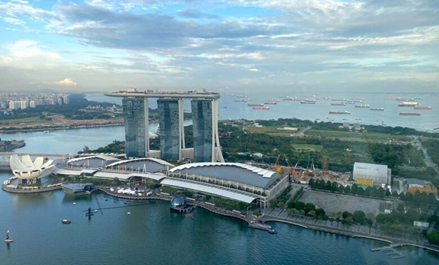
Singapore sells more bunker fuel than any other port by a considerable
margin, shifting more than three times as much fuel as its nearest rival. What
happens to availability and pricing there ripples across global shipping with
immediate effect.
According to Allied Shipbroking, bunker distributors in Singapore have
begun reducing large purchasing commitments in response to violent price swings
linked to disruption risks in the Persian Gulf, a major supplier of fuel oil to
the hub. Distributors typically buy large volumes of fuel oil and marine gasoil
before reselling to calling vessels, but rapid price movements have made
forward purchasing increasingly hazardous. The practical consequence has been
delayed orders, more cautious inventory management – and, critically, a shift
in how suppliers are allocating what stock they do hold.
“Some suppliers have reportedly prioritised long-standing customers
while limiting or postponing other sales in order to control exposure to
volatile fuel prices,” Allied warned in its latest weekly report, adding that
while overall supply remains relatively adequate, the cautious behaviour has
created a tangible impression of tightening availability across the market.
The Maritime and Port
Authority of Singapore moved to calm nerves last Friday, telling the
local Business Times that vessel arrival schedules at
the port had seen no significant changes and that Singapore’s bunker supply –
drawn from several sources – is sufficient to meet current demand.
The price data tells its own story. Clarksons Research puts Singapore VLSFO
at approximately $1,100 per tonne, up 160% since the start of 2026.
Jack Jordan, managing
editor of Ship&Bunker, told Splash today: “Local suppliers in Singapore are
reporting VLSFO and HSFO availability are okay for now, though LSMGO is getting
tight. Elsewhere, availability is tighter than usual, but generally not running
short yet. But the wide premium for VLSFO in Singapore over Brent – at $207.50
per tonne so far this month, compared to a discount of $5 per tonne on average
in 2025 – is a sign of high levels of uncertainty in the market about what’s
coming next. China halting refined product exports is a particular concern.”
Singapore’s bunker market faces a separate and unrelated headache on top
of the supply crunch. Bunker testing firm Maritec-Naias issued an alert on
Friday, warning of elevated levels of chemical compounds – including
Alkylresorcinols in the range of 3,000 to 17,000 PPM and Phenolic compounds
between 2,000 and 3,000 PPM – found in multiple VLSFO samples from vessels that
bunkered in Singapore over recent months.
The affected fuels are considered off-spec under ISO 8217, with vessels
reporting piston ring breakage, excessive sludge formation in purifiers, and
accelerated wear on fuel pumps. Maritec-Naias recommended that shipowners
increase purifier monitoring and avoid blending the affected fuel with other
grades.