

Office Address
123/A, Miranda City Likaoli Prikano, Dope
Phone Number
+0989 7876 9865 9
+(090) 8765 86543 85
Email Address
info@example.com
example.mail@hum.com


123/A, Miranda City Likaoli Prikano, Dope
+0989 7876 9865 9
+(090) 8765 86543 85
info@example.com
example.mail@hum.com
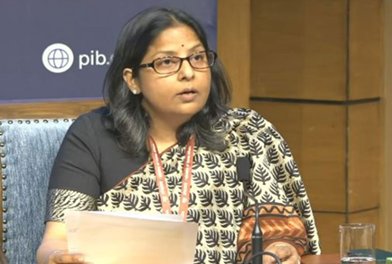
“India’s crude supply remains secure. Our daily
consumption is about 55 lakh barrels. Through diversified procurement, the
volumes we have secured today exceed what would normally have arrived through
the Strait of Hormuz during this period,” Sujata Sharma said at a joint press briefing.
Amid LPG supplies
to India impacted by tensions in West Asia, Sharma said the government has
absorbed a significant part of the cost increase to the increase to protect the
consumers. “Currently, LPG is
being directed to the domestic sector. For non-domestic LPG, priority is being
given to essential sectors such as hospitals and educational institutions. The
committee is consulting with state authorities and industry bodies to finalise
the plan to ensure that available LPG is distributed fairly and transparently,” she said addressing an
Inter-Ministerial press briefing.
Sharma said two LNG
cargos are on their way to India.
“Our gas companies
have procured LNG cargoes from new sources. Two LNG cargos are on their way to
India,” she said.
Speaking about crude supplies, she said India imports
crude from about 40 countries. She
added that domestic refineries are currently operating at full capacity, and in
some cases even above capacity, to ensure a steady supply of petroleum products
across the country.
The government has also decided to prioritise gas
supplies for key sectors such as tea production, gas grid operations and allied
activities, as well as fertiliser manufacturing, which are critical for both
agriculture and industrial activity.
Sharma noted that
the country imports around 60 per cent of its LPG requirements, and about 90
per cent of these imports pass through the Strait of Hormuz.
To strengthen
domestic availability, the government has directed refining and petrochemical
units to optimise LPG production. As a result, domestic LPG production has
increased by about 25 per cent, she said.
The additional
production is being directed primarily towards household consumers to ensure
uninterrupted cooking gas availability, Sharma said.
For commercial LPG consumption, the government has
identified priority sectors including educational institutions and hospitals to
ensure essential services remain unaffected.
Sharma urged people
not to rush book LPG cylinders.
“As a temporary demand management measure, the minimum gap between LPG bookings
has been increased from 21 days to 25 days,” she said.