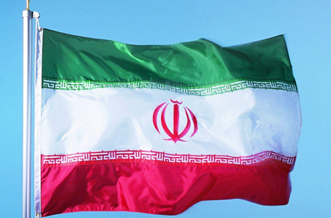
Iran
Iran was plunged into its deepest crisis since the 1979 Islamic
Revolution on 28 February 2026, when the United States and Israel launched a
massive joint military assault on the country, striking Tehran and other cities
in an operation that killed Supreme Leader Ayatollah Ali Khamenei, several
senior military and security officials, and members of Khamenei's own family.
Hundreds of civilians were reported killed in the first days of the attacks,
including more than 100 children at a primary school in southern Iran,
according to Iranian authorities. The attacks drew widespread condemnation,
with the United Nations, China, Russia, and numerous other governments
describing them as a violation of international law and Iranian sovereignty.
US President Donald Trump called on Iranians to ‘take over your
government’ in a video posted on Truth Social on 28 February, framing the
attacks as an opportunity for regime change. Under the UN Charter, the use of
force between states is permitted only in self-defence against an armed attack
or with Security Council authorisation. Neither condition applied: Iran had not
attacked the United States, and no Security Council resolution authorised the
strikes.
UN Secretary-General António Guterres condemned the
operation at an emergency Security Council session, saying it had ‘squandered a
chance for diplomacy’. UN Special Rapporteur Ben Saul described the strikes as
‘not lawful self-defence’ and said they amounted to ‘the international crime of
aggression’. Most Western governments avoided addressing the legality of the
strikes directly — the UK, France, and Germany issued a joint statement urging
Iran to seek a negotiated solution without commenting on the lawfulness of the
attack, while German Chancellor Friedrich Merz argued that international law
should not protect Iran. Whether any political transition serves the interests
of ordinary Iranians, or primarily those of external powers, remains the
central question.
After 28 February 2026 the human cost of the conflict escalated rapidly.
Iran launched retaliatory strikes on Israeli targets and US military bases
across the Gulf, hitting sites in multiple countries, while Israel carried out
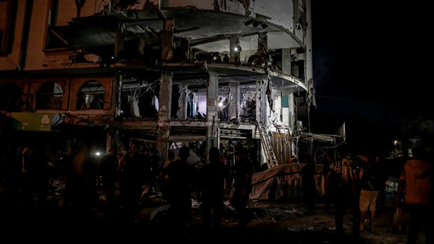
further waves of bombardment in Tehran. Civilian infrastructure, residential
areas, and air hubs were damaged across the region, with airspace closures,
mass flight cancellations, and disruption to oil shipments through the Strait
of Hormuz. US service members were among the casualties, while the full scale
of Iranian civilian deaths has remained difficult to verify due to a near-total
internet and communications blackout imposed on the country's 92 million
citizens. According to HRANA, at least 1,168 civilian deaths were reported in
Iran in the first week of the attacks.
The attacks plunged Iran into a leadership crisis without clear
precedent. A three-member Provisional Leadership Council — comprising President
Masoud Pezeshkian, judiciary chief Gholamhossein Mohseni-Ejei, and cleric
Alireza Arafi — assumed interim authority. The 88-member Assembly of Experts,
the body constitutionally responsible for selecting a new supreme leader, was
itself targeted by an Israeli strike in Qom on 3 March as it reportedly
convened to begin the succession process, throwing the timeline for any
transfer of power into further doubt. The fate of Mojtaba Khamenei, the late
leader's son and once a leading succession candidate, remained unclear amid
conflicting reports.
The military action followed years of escalating US
and Israeli operations against Iran, including the June 2025 Twelve-Day War
that targeted Iran's nuclear and military sites, the reimposition of UN
"snapback" sanctions in September 2025, and the systematic
dismantling of Iran's regional allies — Hamas in Gaza, Hezbollah in Lebanon,
and the Assad government in Syria. Iran's economy had been devastated by
decades of international sanctions, with the rial losing the vast majority of
its value, inflation year-on-year exceeding 60% at the end of 2025, food prices
rising by more than 70% year on year, and nearly one in five young Iranians
unemployed. The protests that erupted in December 2025 were driven by this
economic collapse, but quickly evolved into the largest popular uprising since
the Woman, Life, Freedom movement of 2022. The role of foreign actors in the
protests also drew scrutiny. A Mossad-affiliated Farsi-language X account
posted on 29 December that operatives were “with you in the field” while former
US Secretary of State Mike Pompeo praised “every Mossad agent walking beside”
the protesters. Israeli Heritage
Minister Amichai Eliyahu told Army Radio on 8 January that Israel had “some of
our people operating there right now”, and US Treasury Secretary Scott Bessent
told a Senate hearing that Washington had “created a dollar shortage” in Iran
that came to a “grand culmination in December” when “the Iranian people [came]
out on the street”. Iranian
authorities first cut internet access on 8 January 2026 to suppress coverage of
nationwide anti-government protests, and connectivity dropped to roughly 4% of
normal levels following the 28 February attacks. Human rights organisations
warned that the shutdown was being used to conceal the true scale of state
violence, both from the earlier protest crackdown — which left thousands dead —
and from the bombardment. US and Israeli cyber operations also contributed to
the disruption. Israel reportedly launched a large-scale cyber campaign
alongside its air strikes, targeting government news sites, IRGC communications
infrastructure, and even popular civilian apps, which were hijacked to
broadcast regime-change messaging. With Iranian media largely inaccessible and
independent reporting severely constrained, reliable information from inside
the country remained extremely limited, making outside scrutiny of all parties'
claims essential.

Related News