



Office Address
123/A, Miranda City Likaoli Prikano, Dope
Phone Number
+0989 7876 9865 9
+(090) 8765 86543 85
Email Address
info@example.com
example.mail@hum.com


123/A, Miranda City Likaoli Prikano, Dope
+0989 7876 9865 9
+(090) 8765 86543 85
info@example.com
example.mail@hum.com
ELIRE Maritime and consortium partners Ricardo UK, Schneider
Electric, Rux Energy UK, Triton Anchor Europe, OREC (Offshore
Renewable Energy Catapult), and the University of
Strathclyde, today announced the successful completion of the UKRI-funded
Clean Maritime Demonstrator Competition Round 6 (CMDC6) programme, a £1
million feasibility program and initiative delivered by Innovate UK
in partnership with the UK Shipping Office for Reducing Emissions (UK SHORE),
part of the UK Department for Transport.
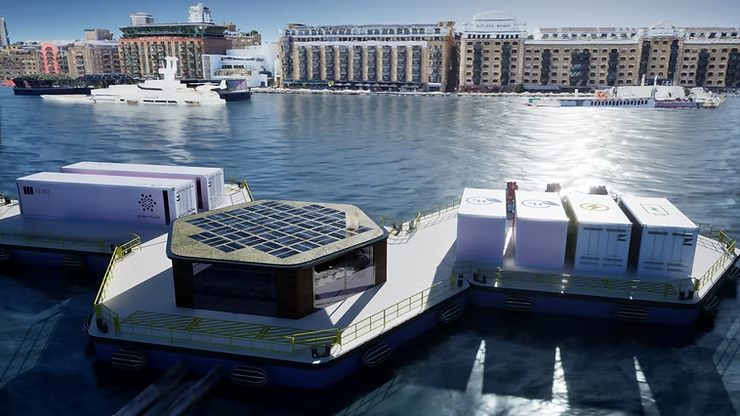
The programme successfully validated one of the world’s first
fully grid-independent Hydrogen Floating Power Hub systems capable of
delivering clean power directly to vessels at berth without requiring
traditional shore-side grid infrastructure. The consortium demonstrated that
large vessels can realistically be powered at berth today using existing
hydrogen, battery, fuel cell, and electrical technologies integrated into a
modular floating maritime system designed for rapid deployment across
global ports.
The solution can now be deployed and would
be expected to support the reduction of up to 500,000 tonnes of
CO₂ emissions globally over the next decade through scalable maritime clean
energy infrastructure capable of operating independently from
constrained port grids.
“Ports are under increasing pressure to decarbonise while facing major
infrastructure constraints,” said Luke Jenkinson, Founder and CEO of
ELIRE Maritime. “The Hydrogen Power
Hub proves that ports do not need to wait years for grid upgrades to begin
reducing emissions. We have validated a practical, scalable, and deployable
system capable of delivering clean power directly where it is needed most.”
The Hydrogen Power Hub establishes a new category of maritime
infrastructure by moving energy and power generation as well
as storage onto water rather than relying on fixed, land-based systems
constrained by grid access, cost, permitting, and land availability.
At full configuration, this particular validated system is capable
of delivering 5MW of continuous clean power output directly to vessels at
berth, enough to support medium-sized cruise vessels and other large maritime
assets requiring both 6.6kV and 11kV shore power connections. This system
integrates three modular hexagonal floating platforms with a combined 1,200 sqm
footprint, approximately 45MWh of battery energy storage capacity, modular fuel
cell systems, hydrogen-powered generation, onboard renewable generation, and
advanced grid-forming AC/DC electrical architecture.
The
consortium confirmed the platform can deliver approximately 91MWh of
energy per week while supporting repeated vessel charging operations without
requiring major civil works, land reclamation, or expensive grid reinforcement.