




Office Address
123/A, Miranda City Likaoli Prikano, Dope
Phone Number
+0989 7876 9865 9
+(090) 8765 86543 85
Email Address
info@example.com
example.mail@hum.com


123/A, Miranda City Likaoli Prikano, Dope
+0989 7876 9865 9
+(090) 8765 86543 85
info@example.com
example.mail@hum.com
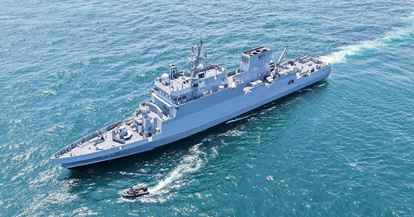
In an interview with
PTI, Admiral Tripathi said the Navy’s efforts are not directed at any
particular country but are focused on protecting India’s maritime interests and
maintaining security in the Indo-Pacific region. His comments come as China’s naval
presence in the Indian Ocean continues to grow and Beijing deepens its maritime
cooperation with Pakistan. Last
month, Pakistan commissioned the first of four Chinese-built diesel-electric
attack submarines, part of an effort to modernise its navy with Chinese
support. According to Admiral Tripathi, the Indian Ocean
Region is experiencing increasing strategic competition and greater involvement
of extra-regional powers, moving away from an era of cooperation towards a
period of intense competition. He said the Indian Navy closely monitors
developments in the region and regularly adjusts its force structure,
operational concepts, deployment patterns and preparedness levels in response
to changing security conditions. According
to Admiral Tripathi, the Navy has significantly improved its surveillance
architecture, maritime domain awareness, anti-submarine warfare capabilities,
underwater surveillance systems, long-range maritime reconnaissance assets and
integrated operational response mechanisms.
He said mission-based deployments at critical maritime choke points and
key shipping lanes allow the Navy to maintain a continuous presence, improve
surveillance and respond quickly to emerging situations across the region. “Our efforts are not aimed at any
specific nation, but rather at ensuring the absolute security of India’s
maritime interests and contributing to a stable, free, open and inclusive
Indo-Pacific. The Navy’s answer to any complex or two-front challenge is
credible deterrence backed by capability,” he said.
The Navy chief stressed that deterrence is not
based solely on the number of ships or platforms a navy possesses.
“Importantly, deterrence is not built merely
through numbers. It is built through credible capability, operational
readiness, technological integration, sustained presence, and the ability to
impose costs, if required,” he said.
Admiral Tripathi also said the Navy is exploring
advanced and niche technologies to gain operational advantages and improve
decision-making during operations.
Expressing confidence
in the Navy’s combat readiness, he highlighted ongoing modernisation
programmes, including the Project 75(I) initiative under which India plans to
acquire six stealth submarines. He also referred to plans to expand the Navy’s
fleet to more than 200 ships. The
Navy chief said capability enhancement and force modernisation remain key
priorities as the maritime environment becomes increasingly competitive and
technologically complex. Since 2025,
the Navy has inducted two submarines and 18 warships, including destroyers,
frigates and anti-submarine warfare vessels, strengthening its operational
capabilities. Admiral Tripathi also
discussed the importance of self-reliance in defence manufacturing, describing
Atmanirbharta as essential for strategic autonomy, technological resilience and
future combat capability. “The most transformative milestone during this
period is our definitive shift from a ‘buyer’s navy’ to a ‘builder’s navy’,” he
said. He noted that all 45 warships
currently under construction are being built in Indian shipyards. He also said
recently commissioned vessels have achieved nearly 80% indigenous content. The Navy chief added that India is moving
beyond simple import substitution and is working towards greater self-reliance
in components, software and other critical systems used in naval platforms. He also described the commissioning of
India’s 100th indigenously designed warship as an important milestone for the
country’s shipbuilding industry. Referring
to recent conflicts in West Asia and the Russia-Ukraine war, Admiral Tripathi
said maritime security is closely connected to economic and energy security.
He said disruptions to shipping routes, energy
supplies and maritime logistics chains can have immediate economic and
strategic consequences, affecting shipping patterns, insurance costs and
regional stability.
The Navy chief also
emphasised the need for greater integration among the armed forces, saying
future conflicts will require seamless coordination across land, sea, air,
cyber, space and information domains.
He said any future theatre command structure should focus on improving
operational effectiveness and military capability. Admiral Tripathi cited Operation Sindoor
as an example of the Navy’s combat readiness and deterrence capability. He said
the deployment of a Carrier Battle Group in the northern Arabian Sea during
tensions with Pakistan demonstrated the Navy’s operational preparedness. According to him, the operation also
highlighted the importance of coordination among the three services and the
need for greater military integration.