




Office Address
123/A, Miranda City Likaoli Prikano, Dope
Phone Number
+0989 7876 9865 9
+(090) 8765 86543 85
Email Address
info@example.com
example.mail@hum.com


123/A, Miranda City Likaoli Prikano, Dope
+0989 7876 9865 9
+(090) 8765 86543 85
info@example.com
example.mail@hum.com
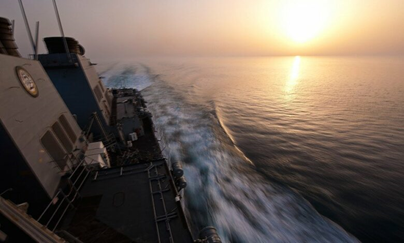
Oman’s Maritime Security Centre issued a navigation warning at the
weekend after the object was spotted west of the Inshore Traffic Zone in the
strait. The MSC urged all mariners to exercise extreme caution and maintain a
safe distance from any suspicious objects.
“Due to the sighting of a floating object suspected to be a floating
mine west of the Inshore Traffic Zone in the Strait of Hormuz within Omani
territorial sea, the Maritime Security Centre urges all seafarers, fishermen,
and vessels to exercise the utmost caution while navigating in the area,” the
MSC warned. “All maritime users are advised to keep a safe distance from any
suspicious objects and report them immediately to the relevant authorities.” A NAVAREA IX navigation warning placed the sighting at position 26-24.3N
056-20.6E around where some vessels that have transited out of the strait in
recent weeks, deliberately hugging the Omani coast to avoid Iranian
interference. The mine warning follows a US Central Command announcement on May 25
that American forces had struck two Iranian boats in the strait that were
attempting to lay mines. US NAVCENT
has since warned that Iran continues to attempt to impede mine clearance
operations and that US forces in the strait are on high alert for Iranian
attack. Shipping has been advised to avoid the Traffic Separation Scheme and
coordinate any transit with US Naval Cooperation and Guidance for Shipping. Beyond the immediate physical threat,
analysts are increasingly focused on a more complex question: what kind of
waterway emerges from this crisis when the shooting eventually stops. Broker
Hartland Shipping describied the negotiating position in its latest weekly
report as one where Washington’s desperation to exit has become an Iranian
advantage. “The president is a victim of the short-war fallacy and is now so
desperate to do a deal and exit that Tehran has smelt blood,” the firm said. The toll question is gaining traction.
Iran has been requesting payment for transits, though it remains unclear how
many operators are paying and how much. Tehran is reportedly considering making
such charges permanent, and has floated the idea of doing so in collaboration
with Oman. Oman has denied any willingness to participate, and President Trump
has threatened military action should Oman collaborate with Iran on transit
fees. Qatar’s deputy prime minister said at the weekend that while Doha opposes
a permanent toll, a temporary fee tied to mine clearance could be negotiable. Sea-Intelligence argued yesterday (31
May) that while the notion of paying for passage through a natural chokepoint
provokes outrage in principle, the shipping industry’s actual behaviour tells a
more complicated story. Operators already pay for armed security guards through
piracy-prone waters, and war risk insurance is itself a form of payment for
operating in contested regions. “We should therefore not rule out an outcome
where some form of payment might be introduced in the Strait of Hormuz,” the
Danish consultancy said. “It is increasingly difficult to tell
whether the Hormuz strait is likely to re-open, remain closed, become a toll
road, a convoy transit area, or another yet unknown arrangement,” law firm
Campbell Johnston Clark said in a new report. “By far the largest uncertainty
to be priced into the market is not the current state of the strait, nor when
it will re-open, but what order will govern the strait when it does.