DP World surpasses 160,000 tonnes of supply chain CO2e savings
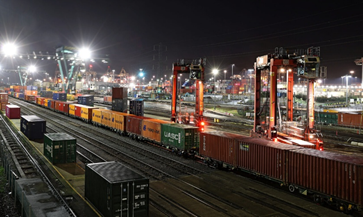
A key contributor has been the company’s Modal Shift Programme, launched in September 2023, which has increased
rail freight’s share of cargo movements at Southampton from 21 per cent to more
than 30 per cent. The programme has transferred over 200,000 container truck
journeys from road to rail. Alongside rail expansion, DP World UK’s Low Carbon
Truck Programme (LCTP) has registered more than 1,500 vehicles. The initiative enables hauliers serving
London Gateway and Southampton to switch from diesel to Hydrotreated Vegetable
Oil (HVO) under its first phase. The
programme has since expanded through the Electric Vehicle Introduction and
Transition Accelerator (EVITA) trial at Southampton.
The initiative allows
operators to deploy electric heavy goods vehicles at parity with diesel
operating costs while assessing performance in live port and logistics
operations over a 12-week period.
John Trenchard, Vice President – Sustainable Supply
Chains at DP World, said: “Exceeding 160,000 tonnes of CO2e savings in just
three years is a major milestone. We see the net zero economy as a key factor
in our future growth and our ability to deliver for customers. “This achievement demonstrates the real
benefits of ports, logistics providers and customers working collaboratively to
decarbonise supply chains at scale. Through initiatives spanning rail freight,
lower-carbon fuels, electrification and carbon inset credits, we are helping
customers reduce emissions while maintaining efficient, resilient and
commercially sustainable supply chains.”
The initiatives are
designed to support reductions in Scope 3 emissions while maintaining supply
chain efficiency and reliability.
DP
World’s Carbon Inset Programme (CIP), launched in January 2025, has also expanded significantly. Registrations
now exceed 250,000 TEUs of cargo after the emissions reduction credits
available through the scheme increased from 50kg to 250kg of CO2e per
container. Earlier this year, the company introduced Container Terminal Inset
Certificates generated through emissions reduction projects at
Southampton. The certificates, which
form part of the wider Carbon Inset Programme, allow customers to account for
emissions reductions achieved through electrification, renewable electricity
and lower-carbon fuels within their own decarbonisation strategies.
Related News