




Office Address
123/A, Miranda City Likaoli Prikano, Dope
Phone Number
+0989 7876 9865 9
+(090) 8765 86543 85
Email Address
info@example.com
example.mail@hum.com


123/A, Miranda City Likaoli Prikano, Dope
+0989 7876 9865 9
+(090) 8765 86543 85
info@example.com
example.mail@hum.com
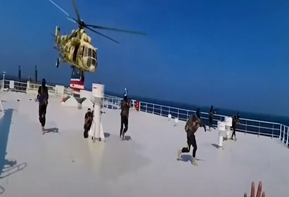
In a statement, spokesman for the Houthi
breakaway Yemeni Armed Forces, Brigadier General Yahya Saree Qasim Saree, said
the move was a response to Saudi Arabia’s targeting of Sana’a International
Airport in a recent attack, as well as “its unjust and oppressive siege on our
dear people for nearly twelve years, plundering our resources and imposing a
comprehensive blockade on our ports and airports by land, sea, and air.” During a recent period of relative peace
around the Bab el Mandeb Strait connecting the Red Sea to the Gulf of Aden, the
Houthi have repeatedly threatened to close the waterway to international
traffic since the start of the war between the US and
Iran. Last week, Reuters reported
that Iran had briefed its Houthi allies to close the Bab el Mandeb Strait
should the US target Iranian power infrastructure in the ongoing conflict.
The Houthi have demonstrated their ability to target international
shipping off Yemen's coast. the group launched a campaign of attacks on ships
in late 2023 that reshaped global supply chains as vessels detoured around the
Cape of Good Hope to avoid the threat of attack, seizure, or destruction in
southern Red Sea. Most container
shipping companies still swallow the cost and delay of shunning the Suez
Canal route in favour of the Cape of Good
Hope diversion to avoid the Red Sea. While the details of the
Houthi embargo were not laid out, any threat to Saudi-linked shipping in the
Red Sea on Saudi Arabia’s west coast carries amplified economic risk to the
nation due to the effective closure of the Strait of Hormuz on its east coast.
The pressure has energy
majors looking for alternatives to keep oil flowing out of the Middle East.
Saudi crude oil volumes have
increasingly been diverted from the usual Gulf export routes, flowing instead
by pipeline for export via the Red Sea port of Yanbu. Since the start of the
Iran conflict, Saudi Arabia began loading VLCCs with
crude destined for Asia at Yanbu, but those ships must then travel via Bab el
Mandeb — within reach of Houthi attacks.
Stunting the flow of Saudi crude out of the Red Sea will inflict further
economic damage on a nation that has already seen its crude oil exports fall to
lows not seen in decades, while volumes transported to the Red Sea by pipeline
for export have quadrupled in the months since the US-Iran war started. For the
first half of July, around 75% of Saudi crude and condensate exports were via
Yanbu, according to Kpler data.
While there was a return to near-normality for Saudi oil exports in
the Gulf in June 2026 after the signing of a peace MoU between the US and Iran,
Hormuz has slammed close once again. Tanker traffic through the Strait of
Hormuz hit fresh lows in recent days as Iran continues to assert its control of
the narrow waterway by attacking ships choosing to use the US-administered
southern route through Suez off the Oman coast.
Kpler reported 30 transits in the period
17-19 July, compared to JMIC's pre-war level of 138 vessels per day. The most recent incident suspected to
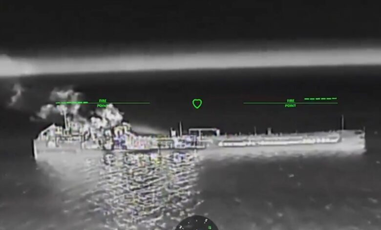
involve Iran saw Dynacom tanker Kavomaleas set ablaze off Oman and
its crew abandon ship. As of 19 July, there had been 11 Iranian attacks on
ships in the Strait of Hormuz since 25 June, according to JMIC figures. Iran’s use of Hormuz has also been cut off
by a renewed US military blockade. As of July 19, the blockade had redirected
six vessels and disabled one vessel, according to US Central Command.