



Shipping powers warn global maritime rulebook is breaking downShipping powers warn global maritime rulebook is breaking down
In a public statement titled In defence of free shipping,
the Consultative Shipping Group (CSG), whose members include Greece, Japan,
South Korea, Singapore, Norway, Denmark, Germany and the UK, said the
accumulation of wars, chokepoint disruption, shadow fleets and discriminatory
trade measures amounts to a structural change in shipping’s operating
environment. The group’s members represent more than a fifth of global trade by
tonnage.
The CSG argued that maritime transport should now be viewed as critical
infrastructure underpinning not only trade but global food and energy
security. The warning goes well
beyond the current battle over the Strait of Hormuz. The CSG pointed to covid,
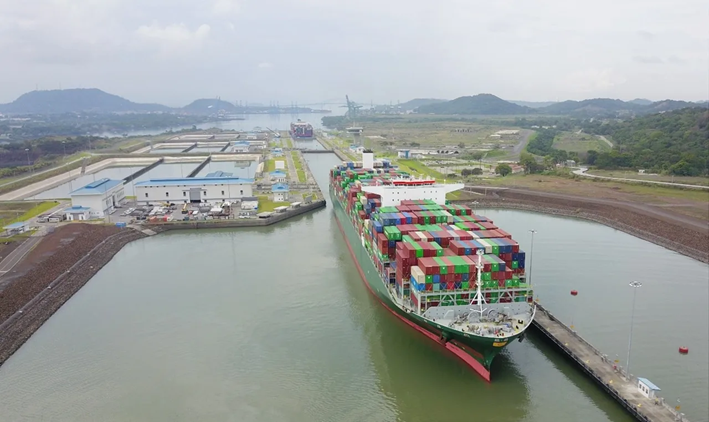
the war in Ukraine, drought at the Panama Canal and conflict in the Middle East
as repeated demonstrations of how vulnerable maritime supply chains have
become. It also highlighted discriminatory trade measures and the proliferation
of different national and regional approaches to shipping regulation.
Uncertainty over whether ships will retain access
to particular ports or routes directly affects long-term commercial planning,
the group argued, while fragmented regulation ultimately fragments markets and
raises costs.
Shipping routes, once
largely treated as neutral conduits for trade, are increasingly being used as
geopolitical leverage. Hormuz provides the most immediate example. Iran has
sought to impose greater control over merchant traffic through the strait while
attacks on commercial shipping have multiplied, challenging the assumption that
international chokepoints will remain reliably open to neutral trade. The CSG is an international forum of major
maritime nations dedicated to promoting open, fair, and competitive global
maritime transport. It brings together countries from Europe, Asia, and North
America to consult on key shipping policies and regulatory challenges. The CSG stressed that the answer is not
simply to write more regulations, but to apply existing international rules
more consistently. It singled out the
United Nations Convention on the Law of the Sea, including rights of innocent
and transit passage, while describing the International Maritime Organization
as the central global forum for maintaining navigation, safety, security and
fair competition. The group also took aim at the explosive growth of
the shadow fleet created by sanctions on Russia and Iran. Hundreds
of ships now operate outside conventional insurance, safety and transparency
frameworks, the CSG said, creating parallel maritime systems that bypass
environmental and safety standards. “The result is a two-tier system, one
governed by rules, the other by opacity,” the statement warned. Industry estimates put the wider shadow
tanker fleet at more than 1,500 vessels, approaching a fifth of global tanker
capacity. The CSG’s prescription is greater cooperation between maritime
nations, consistent enforcement across jurisdictions, better information
exchange and renewed political backing for multilateral institutions. The statement culminates in a direct
appeal for maritime states to defend freedom of navigation and prevent
fragmentation becoming embedded within shipping networks. “When shipping supply chains fragment, the
global economy fragments with it,” the CSG warned.
Many of the same concerns will form the backdrop to the opening Big
Issues session at Splash
Singapore, Asia’s leading shipping conference, at the
Fairmont Hotel on September 24. The
session will examine the forces reshaping shipping beyond the normal
market-cycle debate, with particular emphasis on how organisations should
operate when geopolitics, regulation, technology and commercial risk collide.
The discussion will
ask how companies should structure themselves, allocate risk, maintain fast
decision-making, retain talent and avoid paralysis when visibility is poor and
long-established assumptions can no longer be relied upon.
On stage will be Bjorn
Hojgaard of shipmanagement giant Anglo-Eastern, Hor Weng Yew of Pacific
Carriers, Swire Shipping CEO Jeremy Sutton, John Su of Erasmus Shipinvest, AET
president Nick Potter and X-Press Feeders CEO Shmuel Yoskovitz.
Related News