Warning of Harsh Penalties for Terminals Importing “Illegal" Russian Diesel
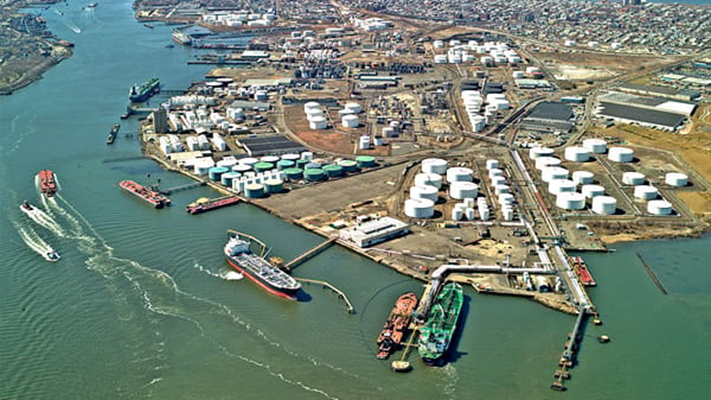
Governor Mikie Sherrill followed through on her earlier remarks and, on November 2, sent a letter to port and
terminal operators in New Jersey warning of likely "harsh penalties"
and warning that New Jersey would “use every available legal and regulatory
tool” in efforts to stop the arrival of Russian diesel fuel. The letter warns that the
consequences of allowing any vessel containing Russian fuel to unload or
purchasing the fuel could subject the operators to “millions of dollars in
penalties long after Trump has left office and his corrupt administration has
come to an end.” Sherrill contends
that the importation “directly conflicts with federal law.” The letter points
out that the U.S. Congress enacted legislation in April 2022 ending the
importation of Russian oil and notes that only Congress can repeal the act. The
letter asserts the president and executive branch do not have the legal
authority to bypass the act of Congress.
Donald Trump heralded a deal with Vladimir Putin and Russia to import
Russian diesel as a way to lower the skyrocketing price of the fuel in the
United States and on the world market. The administration issued a license for
the importation of the diesel fuel, but Sherrill contends in the letter neither
the president nor the Department of Treasury has “blanket authority to waive
these sanctions through licenses.”
The letter asserts that the only exception is if the president can
certify Russia has agreed to withdraw its forces from Ukraine. Alternatively,
the license would require completion of a congressional review process before
it could go into effect. Under U.S. law, persons who import the illegal fuel
“shall be liable to a penalty equal to the value” of the articles
imported. Sherrill’s warning follows
other objections from members of Congress. Sherrill had said last week that New
Jersey was evaluating its options. Senator Richard Blumenthal of Connecticut
had also issued a statement calling on the shipping companies to recall the
tankers loaded with diesel. Russian
officials had stated publicly that three tankers had departed with the diesel
exports for the United States. They were expected to reach the United States
possibly as early as the end of this week. Other sources contended that as many
as six or seven tankers were bound for the United States, although at least one
report had to be retracted when the operators asserted their vessel had liquid
fertilizer and not diesel fuel.
Analysts at Windward continued to track the supposed product tankers
bound for the United States. In a report released today, they highlight that another one of
the tankers, Talisman, recently changed its AIS transmission to “for
orders” and the vessel has turned east, passing the Strait of Gibraltar into
the Mediterranean. The product tanker Leruo also changed its AIS to show
“Brazil for orders.” Windward highlights that both vessels represented
additional challenges for the ports as they not only appear to have Russian
diesel loaded but are also operating under sanctions.
Only the Greek-owned product tanker Agioi
Fanendes appears to still be bound for the U.S. Atlantic East Coast. It had originally
displayed New York as its destination but also changed the transmission to “for
orders.” The vessel appears to be in the middle of the Atlantic continuing its
westbound course.
Industry executives and analysts have said the amount of diesel bound
for the United States amounted to nothing more than a symbolic gesture.
Consumption far exceeds the amounts being sent, and the forecast was that the
imports would have no meaningful impact on the cost of diesel fuel in the
United States, which is currently averaging well over $6.00 per gallon and in
many places reaching and exceeding $7.00.
Related News