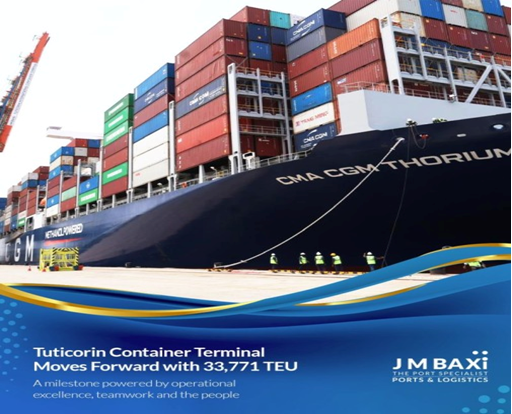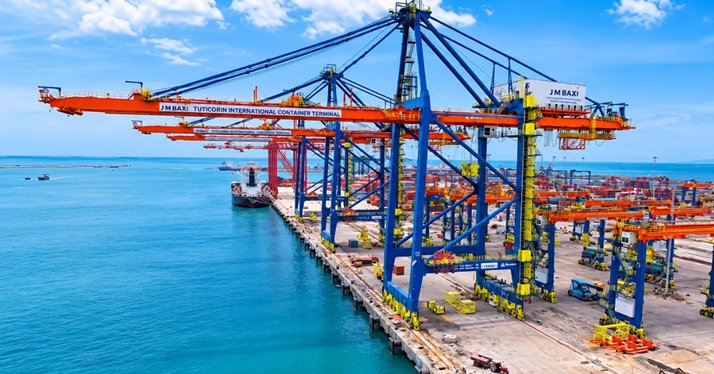
VOC Port’s Tuticorin International Container Terminal declared a “Green Terminal” After Full Equipment Electrification
On Tuesday, (20 Oct) the
Secretary flagged off 13 electric Internal Transfer Vehicles (E-ITVs) to
support cleaner container handling at the terminal. VOC Port Chairman Sushanta Kumar Purohit
said the port has an annual cargo capacity of 82 million tonnes. He described
it as one of India’s oldest operational ports, with trade links dating to 123
AD. The port is also developing social facilities for employees, including a
golf course and a Kendriya Vidyalaya. The Secretary reviewed the port’s green
infrastructure, which includes: A
pilot methanol bunkering and refuelling facility A green hydrogen pilot project Wind energy facilities, put at over Rs
18,400 crore in the statement The
review also covered the outer harbour project, costing over Rs 15,000 crore.
The statement says it will add 4 million tonnes a year of cargo capacity and
aims to make Tamil Nadu a major transhipment hub for southern India.
Electrifying all operational equipment at a container
terminal cuts diesel use and local emissions from yard and quay operations. It
also positions the port as a cleaner gateway as shipping lines and cargo owners
look for lower-carbon supply chains. The tag covers the terminal’s equipment,
and does not say anything about the fuel used by visiting ships. VOC Port’s
broader plans on methanol, hydrogen and the outer harbour show it is trying to
pair green credentials with larger transshipment capacity.

Related News